01LASER CLEANING MACHINE
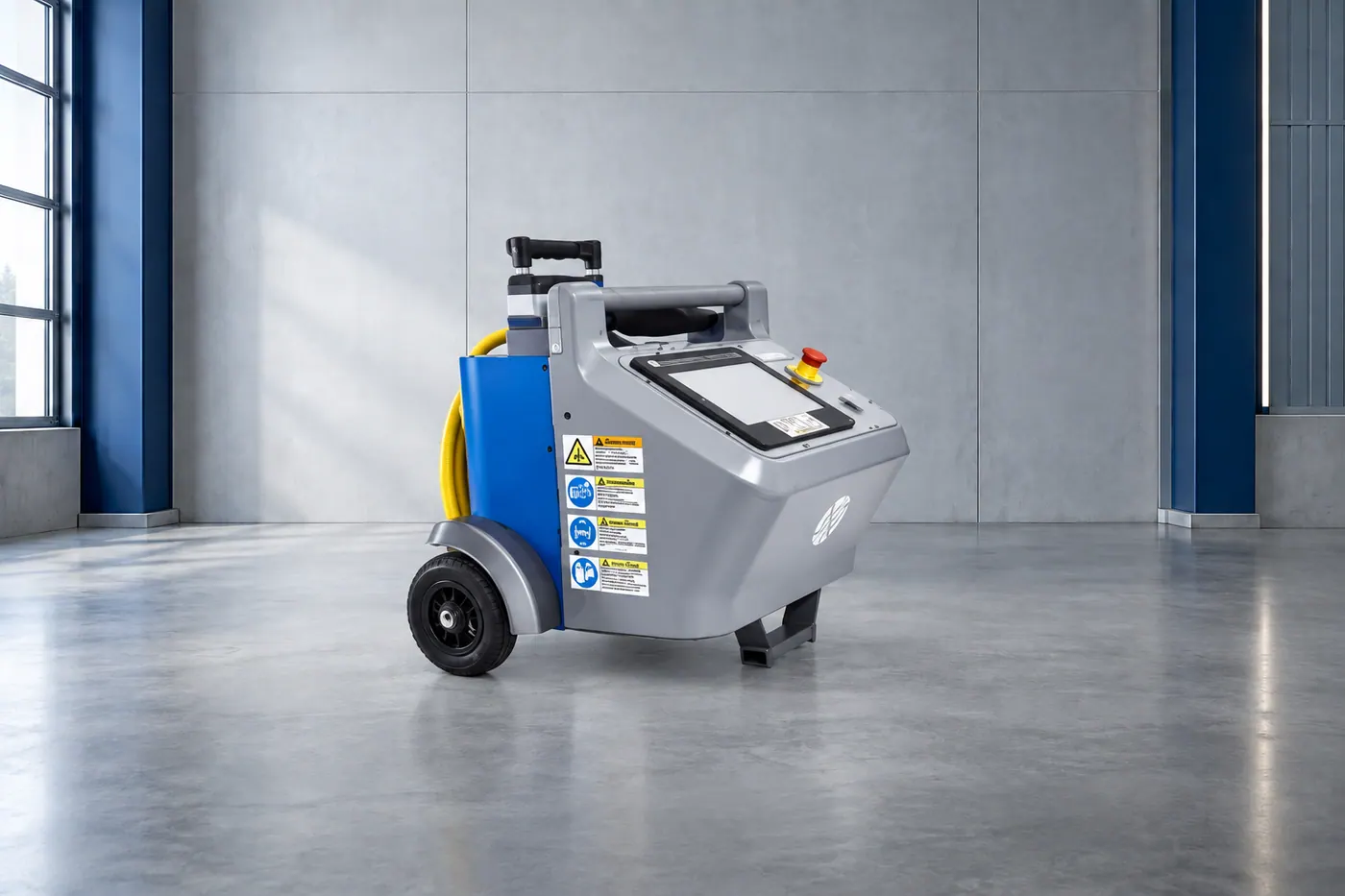
ROD 100 Air
100 W · pulsed · air-cooled
Assess ROD 100 Air against your components and required surface result.
APPLICATION · PAINT REMOVAL
The laser removes paint layer by layer, if required only the topcoat and only on part of the surface. What it can do, how fast it is, and where chemical stripping, an oven or blasting is the better choice.
Request equipment advice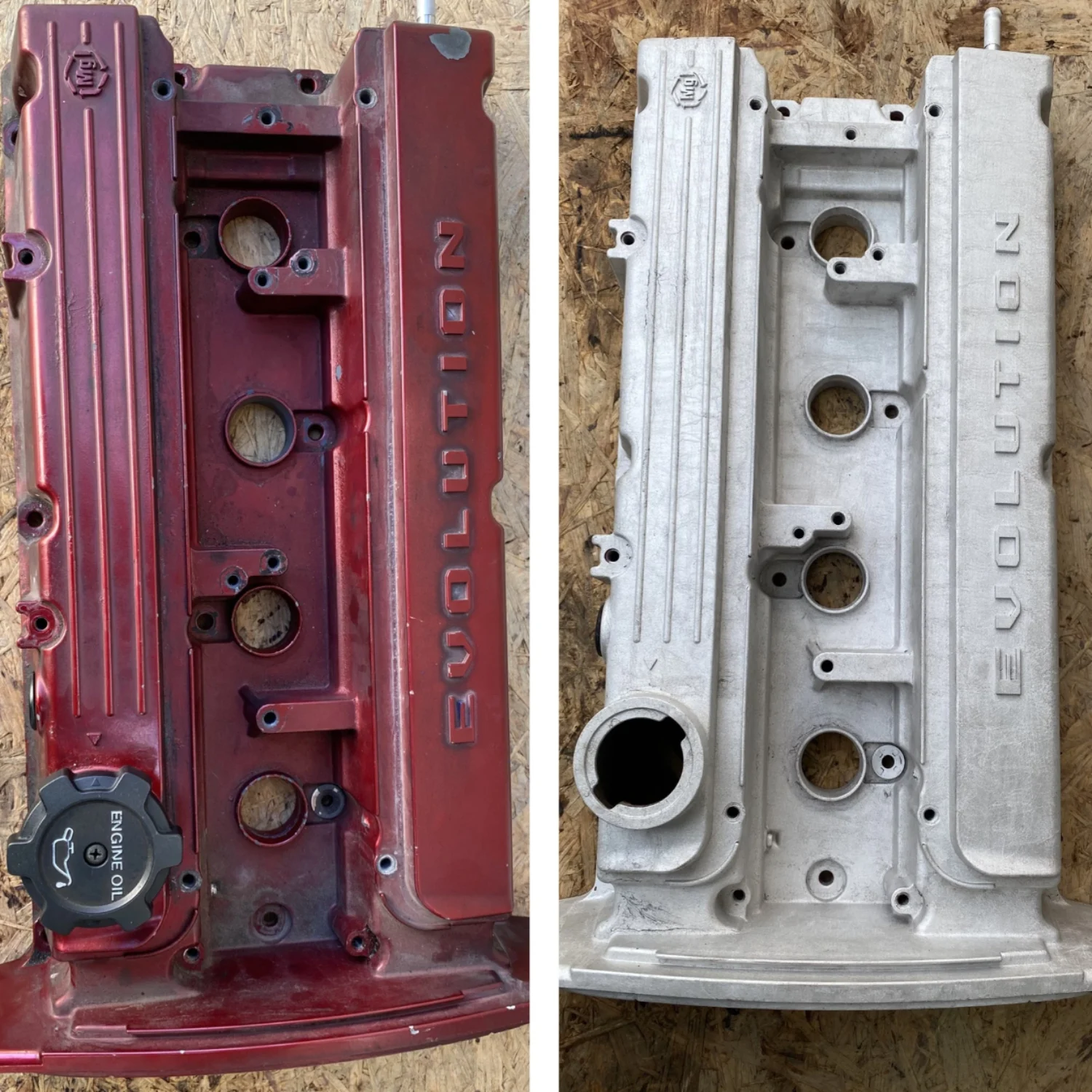
MODELS IN OUR RANGE
Three pulsed models with 100, 300 and 1000 W. Your enquiry establishes whether a configuration suits the coating, its layers and the substrate.
100 W · pulsed · air-cooled
Assess ROD 100 Air against your components and required surface result.
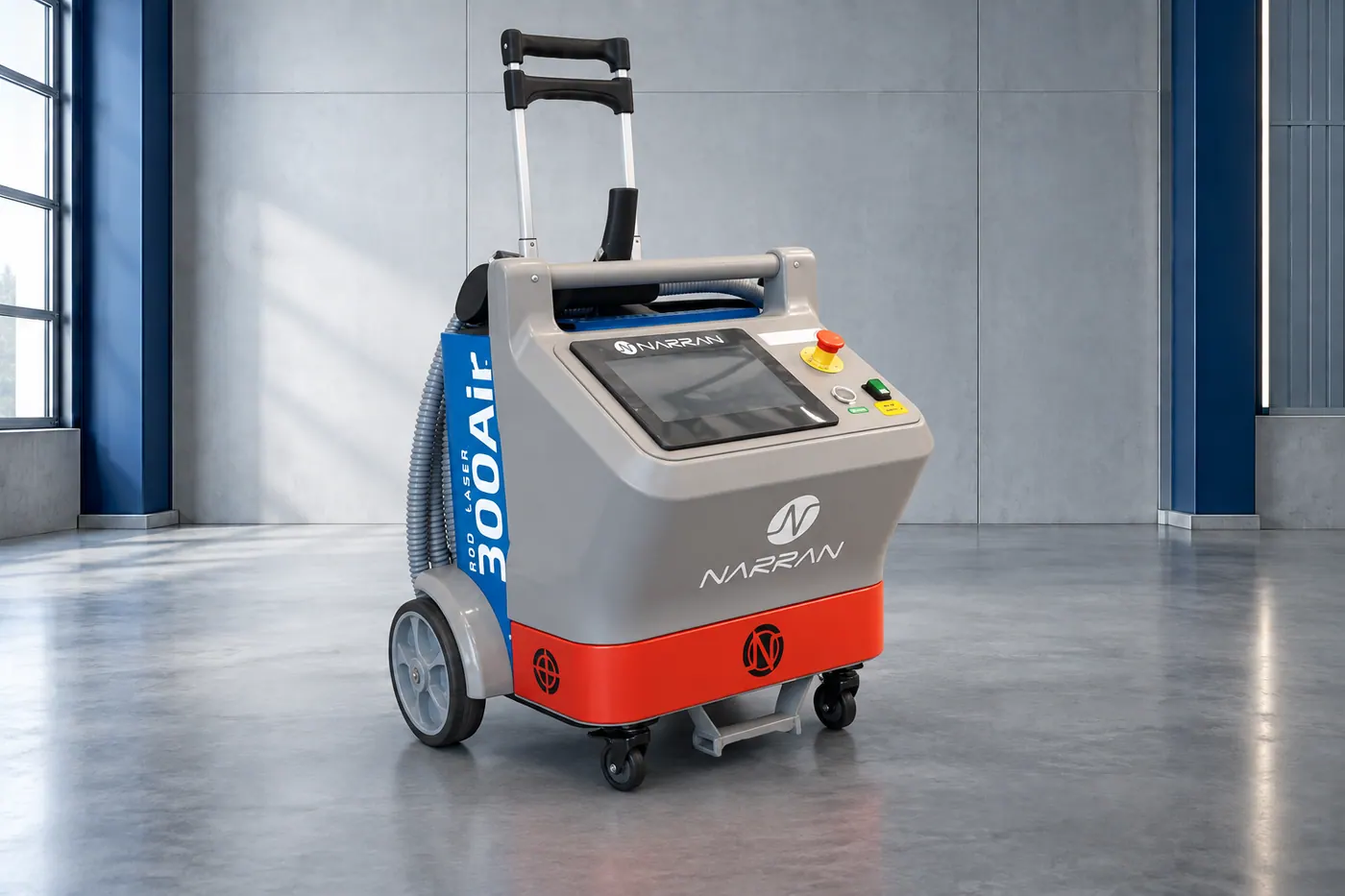
300 W · pulsed · air-cooled
Enquire about ROD 300 Air for your workflow and planned components.
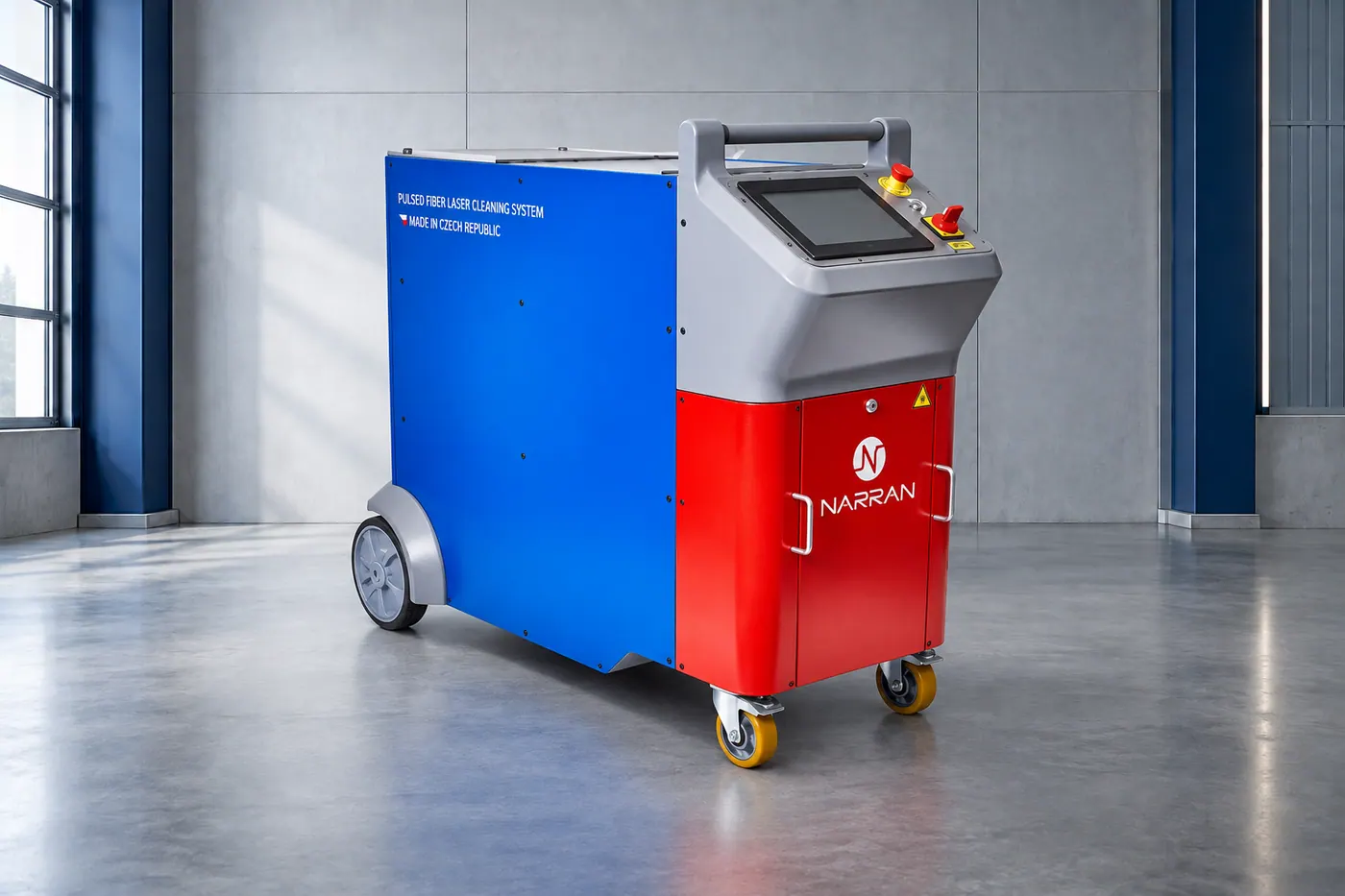
1000 W · pulsed · water-cooled
Assess ROD 1000 for your process and the next production step.
Data as published by the manufacturer, as of 23 September 2026. The quotation confirms the current configuration. Studio views are AI visualizations based on manufacturer images.
REAL-WORLD FOOTAGE
Consider the coating and substrate together. The video shows a different material from the engine cover in the photo.
Manufacturer-supplied excerpt credited to cistenilaser.cz. The door material shown does not prove the same result on metal.
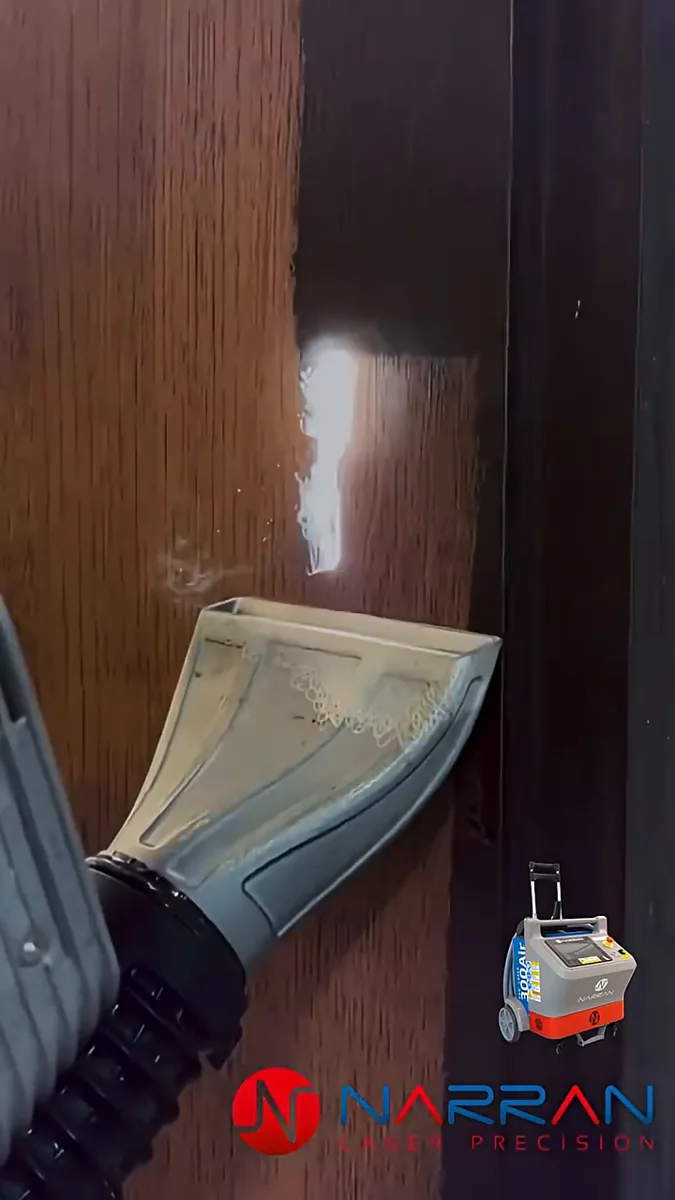
The frame shows visible removal; your coating system and substrate need a separate assessment.
Would this process suit your part? These examples help frame the question; equipment selection depends on your materials, surfaces and requirements.
Laser paint removal means that a coating is removed with laser radiation. It is also called laser paint stripping or laser decoating, and the machine is searched for as a laser paint remover. The meaning is always the same.
The paint absorbs the laser light, heats up abruptly and passes straight from solid to gas. This produces dust and gases, which are extracted. In German technical usage laser decoating therefore counts among the thermal methods, although the part itself hardly warms up. How much area the laser covers depends above all on the layer thickness.
According to the manufacturer, the three machines above are pulsed, with 100, 300 and 1000 W average power. Short pulses remove thin layers, and hardly any heat reaches the base material. The basics are in the guide How laser cleaning works.
What the laser has over the other methods is control of depth. Fraunhofer IFAM describes layer-by-layer removal like this: depending on the coating and the settings, the topcoat can be removed while the primer is only affected in the border area and can be recoated directly.
This is used where the primer is too good to remove. In aerospace the primer stays. In car production the topcoat is taken off so that a windscreen can be bonded directly to the primer. In 2018 the US Air Force took robot-guided laser paint removal for F-16 jets into maintenance. A vision system recognises when the desired layer has been reached, and the removed material is extracted at once.
The same precision applies across the surface. The beam only hits what it is moved across, and the edge is sharp. For a contact point, an earth connection or the zone of a weld seam, masking is therefore often unnecessary.
| Coating | What is documented |
|---|---|
| Wet paint, powder coating | removable; for area rates see the chart below |
| E-coat (cathodic dip coating) | removed selectively in practice; fine patterns stay free of burrs |
| Phosphate layers | standard application before welding |
| Shop primer | about 20 m per minute at 20 mm track width, according to one manufacturer |
| Anodising on aluminium | removable; the removal rate rises with power |
| Fluoropolymers (PTFE, PFA) | removable; in one study a continuous-wave laser left charred residues |
| Zinc | stays undamaged when galvanised parts are cleaned, according to one manufacturer |
| Very thick, multi-layer old paint | possible but slow: several passes |
The table does not replace a trial. How well a layer comes off depends on its thickness and on how strongly it absorbs the laser light. Neither is usually in the paint’s data sheet.
There is no figure in square metres per hour for paint removal that was measured by a third party at a known layer thickness. One manufacturer of pulsed fibre lasers does publish a table by power and layer thickness. It shows the order of magnitude.
Manufacturer figures, converted
Area rate for paint removal: paint and powder coating
100 W
300 W
500 W
1000 W
2000 W
Two things can be read from it. Double the layer thickness costs roughly half the area. And there is more than a factor of four between 500 and 2000 W, because the large machines use a different laser type that removes faster.
A second manufacturer quotes 3 to 10 m² per hour for paint at 500 W without stating the layer thickness. The gap between the two shows how little a single figure says. Only a trial on your paint is reliable.
Most paint shops strip mechanically or chemically today. In a 2025 survey, 69% used mechanical methods, above all blasting, and 56% a chemical one. Laser stripping is used less often, the survey says. The table shows why each method has its place.
| Laserpulsed, handheld | Stripper, dip tankchemical | Pyrolysis oventhermal | Blastingwith solid abrasive | |
|---|---|---|---|---|
| Partial areas, topcoat only | well suited: sharply defined, layer by layer | unsuitable or laborious: the bath covers the whole part | unsuitable or laborious: the whole part goes into the oven | unsuitable or laborious: targeted stripping hardly works |
| Cavities, intricate parts | unsuitable or laborious: only where the beam can reach | well suited: the medium surrounds the part | well suited: heat reaches every spot | suitable with limits: from the outside only |
| Very thick layers | unsuitable or laborious: several passes | suitable with limits: longer bath time | well suited: method of choice | well suited: well suited |
| Aluminium and heat-sensitive parts | suitable with limits: possible; confirm in a trial | suitable with limits: alkaline baths are ruled out for light metals | unsuitable or laborious: parts must withstand about 450 °C | suitable with limits: thin sheet can warp |
| Large areas | suitable with limits: slower than blasting | suitable with limits: limited by tank size | suitable with limits: limited by oven size | well suited: fast and even |
| What is left over | well suited: paint residues in the filter | unsuitable or laborious: chemical waste | suitable with limits: ash; after-treatment usually needed | unsuitable or laborious: blasting debris |
well suitedsuitable with limitsunsuitable or laborious
Chemical stripping has carried a restriction since 2012: paint strippers containing dichloromethane may no longer be used by professional users outside industrial installations. The pyrolysis oven works at 400 to 450 °C, uses a lot of energy and usually calls for after-treatment. The guide Laser cleaning vs sandblasting compares blasting in detail.
Removing old paint means dealing with more than colour. Red lead was a widespread rust protection, and according to the German rule TRGS 505 the lead content of old paint can be several hundred grams per kilogram. This affects steel structures, bridges, ship hulls, masts and also old windows and doors. Chlorinated rubber paints from 1947 to 1972 contained up to 10% PCB. Chromates, tar-containing coatings and fillers containing asbestos come on top.
The laser does not make these substances harmless. It puts them into the air as fume and fine dust. The DGUV therefore advises having unknown coatings analysed before work. Where nothing is known, the highest protective measures apply. For lead, TRGS 505 gives an air limit value of 30 µg per cubic metre and points out that even meeting this value is not sufficient in every case.
In practice: have a sample taken, wait for the result, then define extraction, filters and protective equipment. The guide Laser safety for laser cleaning has more on occupational safety.
Steel is the straightforward case. In one study only a few small paint residues were left after stripping, at a roughness of 0.5 µm.
Aluminium needs more care. In a study on alloy 2024, the threshold for paint removal was 138 W of laser power and the threshold for damage to the base material 556 W. The window is wide, but it has an upper limit. Once the paint is gone, the bare aluminium can oxidise again.
Composites are possible but not a given. The US Air Force approval only covers certain aluminium grades and carbon fibre composites that withstand more than 177 °C in service.
Thin sheet calls for a pulsed laser and a brisk hand. If the beam moves too slowly, the sheet takes up too much heat and begins to melt at the surface.
State the base material, the type of coating and, as far as known, the layer structure and thickness. Add whether everything should come off or only a partial area, what happens to the part afterwards and how much area there is per job. If you do not know the coating, write exactly that. The buying guide helps you put it together.
What does a laser for paint removal cost?
Paint type, layer thickness, base material and area are enough to narrow down the power class. The price is stated in the quote.
In the automotive industry, stripping clearly defined zones often runs as a fixed step in the line. In aerospace every component needs its own qualification and approval. This page does not replace it.
YOUR NEXT STEP TOWARDS EQUIPMENT
Describe your application and intended use to prepare equipment selection.