START HERE
Small, defined areas
For targeted cleaning of individual parts, ROD 100 Air is worth assessing. The manufacturer positions its lower-output class for more precise work.
SEE IT IN MOTION
See how the system is handled, then use your own material and required finish to judge suitability.
Full video from the manufacturer’s archive. Accelerated sections are marked on screen. The title does not specify the exact Air configuration.
The video could not start. Use the video link below.
Open video separately ↗The substrate and coating should match your part.
Judge the cleaned area against the next step in your process.
Consider access, head handling and processing time together.
MANUFACTURER FOOTAGE
Short excerpts show how the head moves and how the visible surface changes.
Excerpt from the ROD 100 video. Already accelerated three times in the original; not a real-time measurement.
The video could not start. Use the video link below.
Open video separately ↗Excerpt from “100W Laser cleaning oil and grease”. The file title does not specify the exact Air configuration.
The video could not start. Use the video link below.
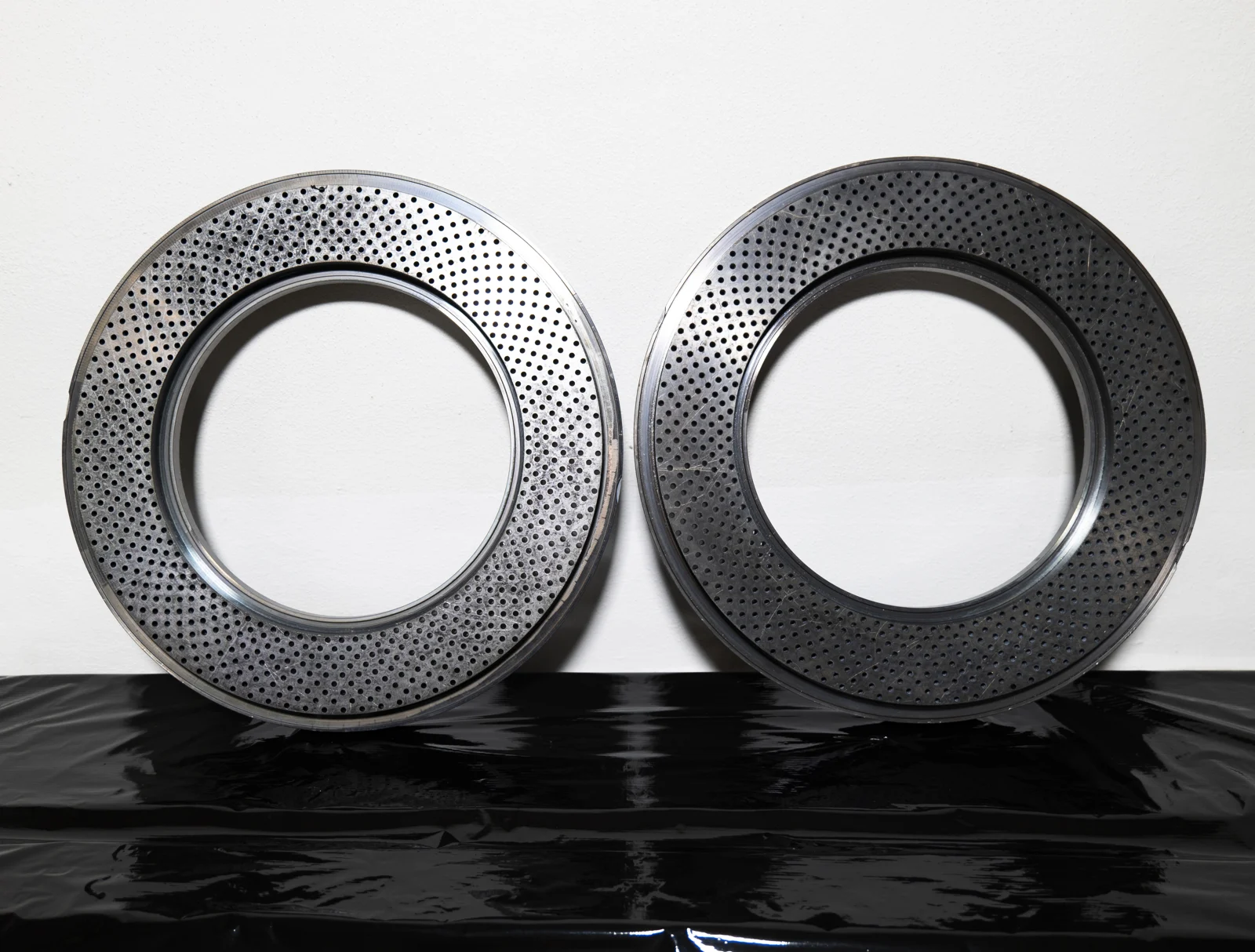
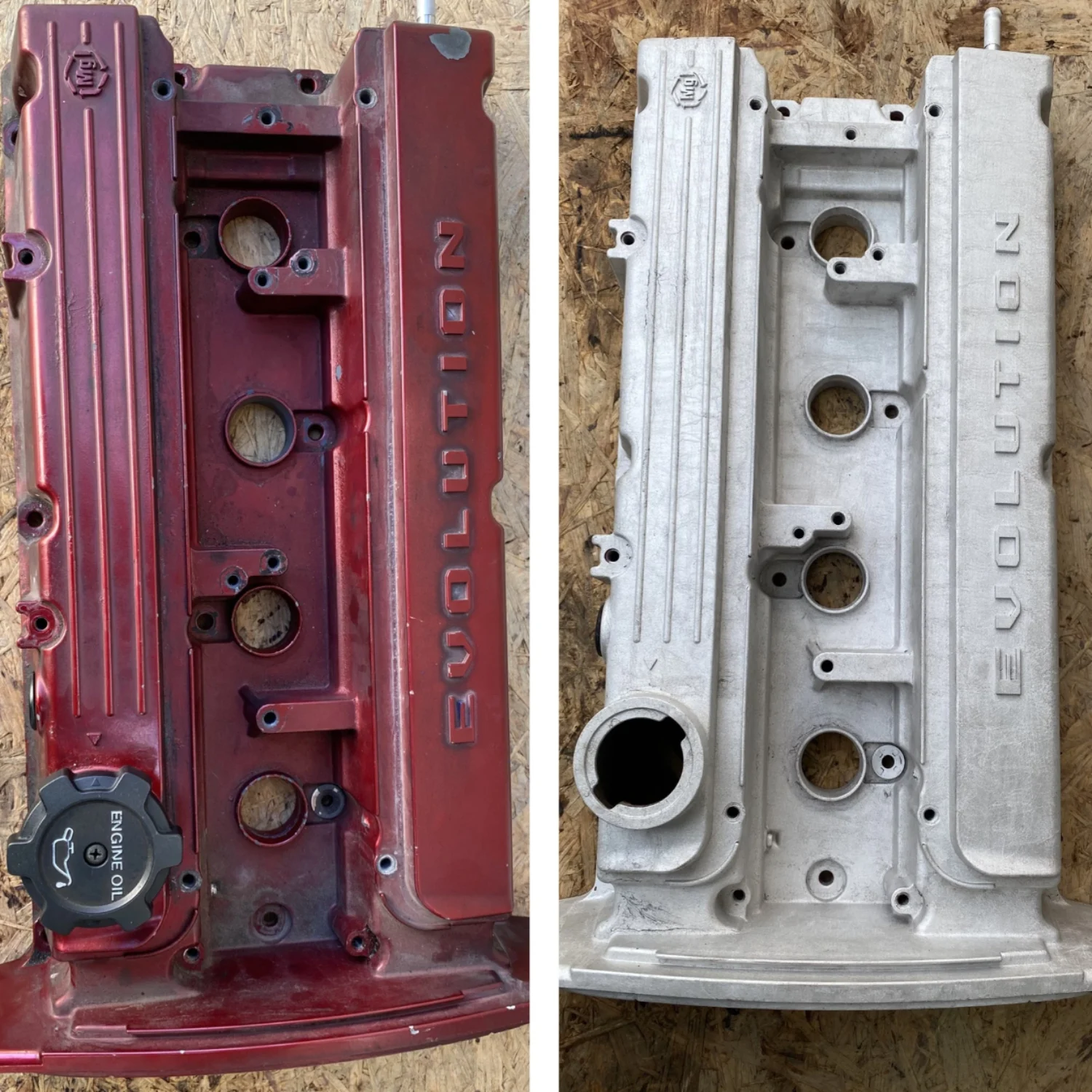
Open video separately ↗Photos from the manufacturer’s archive. The laser model used is not specified.
 Enlarge photo ↗
Look closely at the visible surface around the holes and edges.
 Enlarge photo ↗
The comparison shows outer surfaces, recesses and the outline of the part.
Describe the substrate, coating and required finish in your enquiry. These recordings show examples; they do not replace an assessment of your part.
APPLICATION FIT
Where ROD 100 Air may be a useful starting point, and when a higher-output machine deserves comparison.
 PROCESSING HEADS · MANUFACTURER PHOTO
For targeted cleaning of individual parts, ROD 100 Air is worth assessing. The manufacturer positions its lower-output class for more precise work.
Coating type and thickness, substrate and target surface decide suitability. A data sheet cannot settle the result for your actual part.
The manufacturer warns that heavy deposits can be slow with lower-output systems or need preparation. Compare other ROD models when throughput matters.
Assessment based on the manufacturer’s equipment selection guidance. We have not carried out our own performance or material test.
APPLICATIONS
Explore the task in more detail. Whether ROD 100 Air suits it depends on your part and target finish.
GET TO KNOW THE MACHINE
From the processing head to cooling: understand how handling, beam delivery and machine placement fit together.
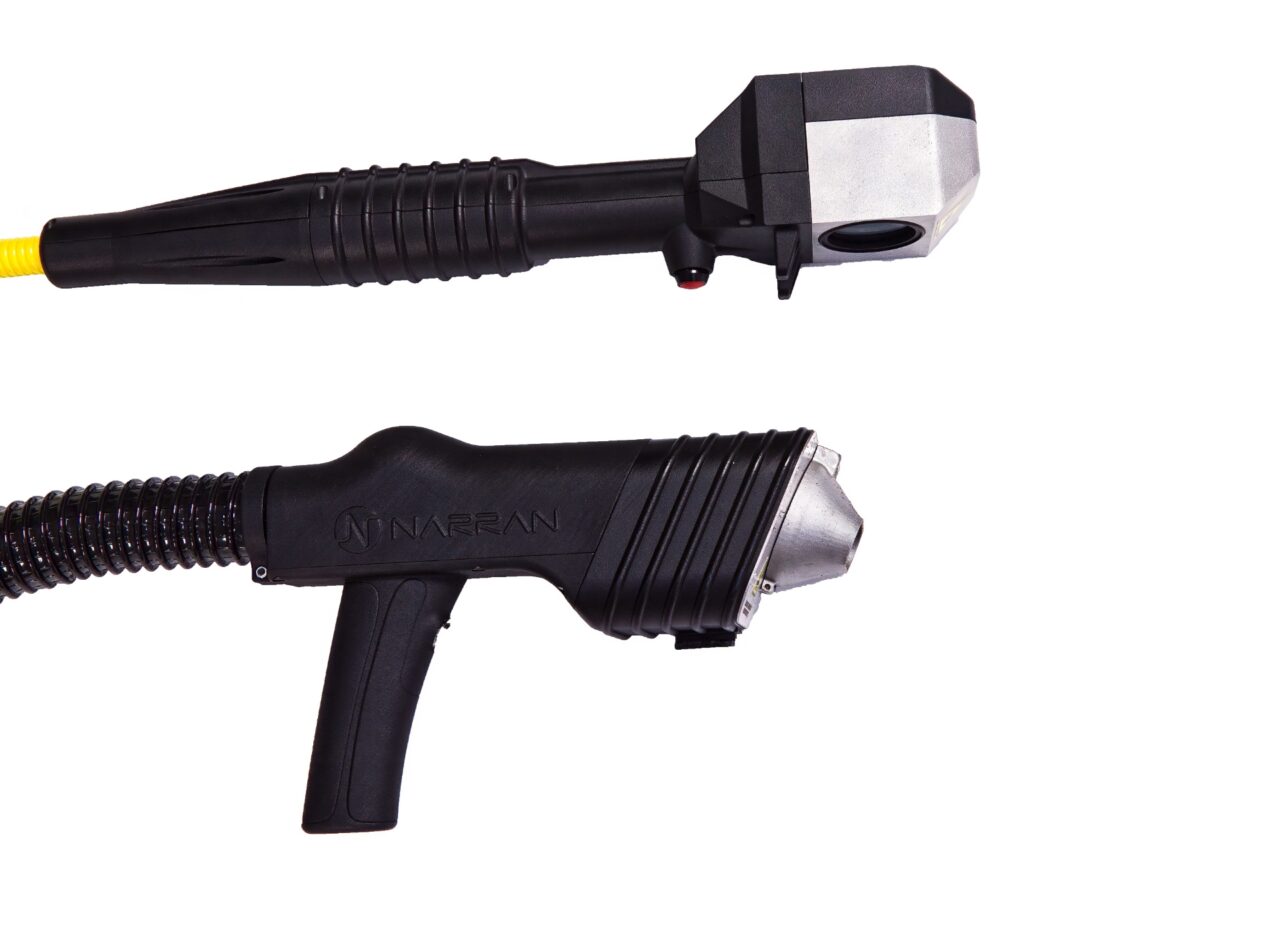
Manufacturer photo of the ROD range. The head for ROD 100 Air is specified in the quotation.
The processing head is the tool at the part. The fibre carries the laser beam from the unit to the head. The scanner then moves it across the selected processing field.
The catalogue lists two-axis scanning. Optics, scan pattern and settings need to suit the area you want to clean.
Two-axis scanning explained ↓Machine cooling ≠ extraction at the part
Simplified concept diagram, not an installation drawing.“Air” describes how the machine is cooled. Airflow through the cooling system carries heat away from the unit. Keep the intake and exhaust clear; the exact configuration’s instructions define the required clearances.
This is separate from capturing particles and fumes released during cleaning. Extraction is planned around the coating and workplace.
Plan the workplace ↓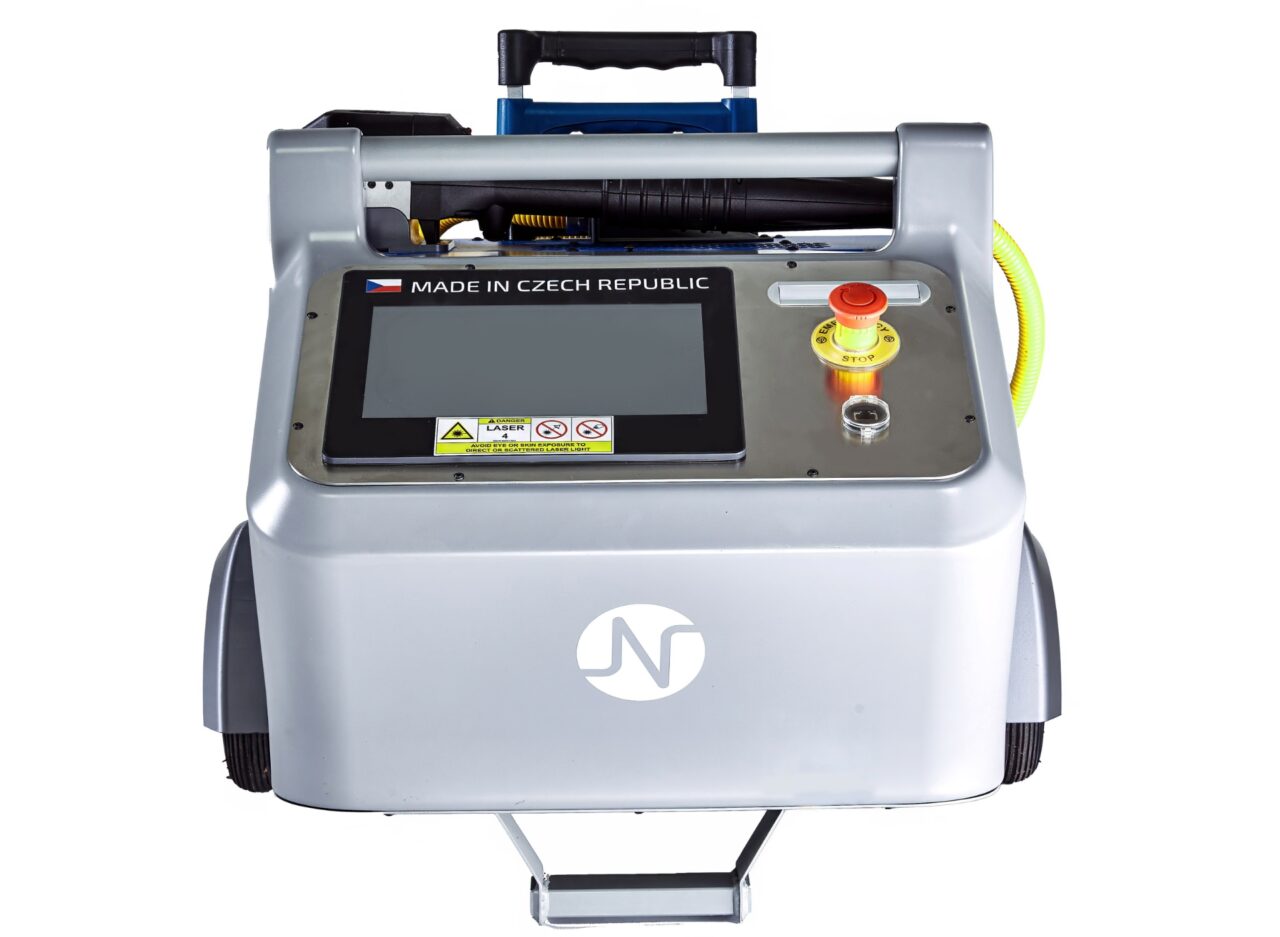
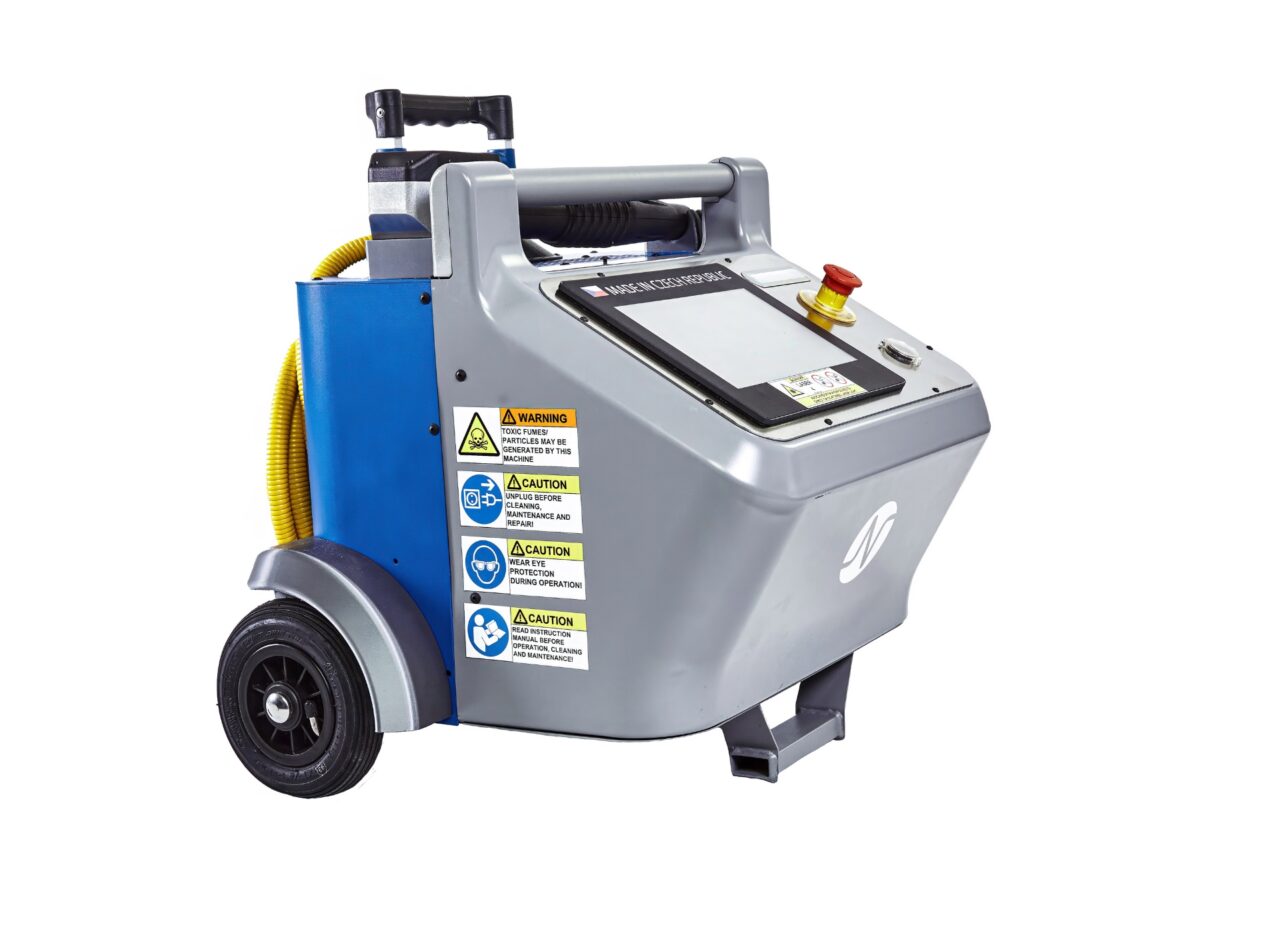
Manufacturer photo of the ROD 100/300 range. Configuration follows the current quotation.
The wheeled unit and handheld head do different jobs. The catalogue weight of 39 kg refers to the machine. The optical fibre connects it to the head; its listed length is 5 m.
Actual access also depends on routes, floor space and fibre routing. Fibre length is therefore not automatically a usable working radius.
Understand reach and weight ↓TECHNICAL SPECIFICATIONS
Key catalogue data at a glance, with practical explanations for every specification below.
| Specification | Value |
|---|---|
| Average optical output | 100 W |
| Machine cooling | Air |
| Optical fibre in the catalogue | 5 m |
| Machine weight in the catalogue | 39 kg |
| Catalogue supply voltage | 230 V |
| Beam scanning | 2D |
This is the average optical output of the pulsed laser. It is neither a pulse’s momentary peak power nor a square-metres-per-hour cleaning rate.
Cleaning time and finish also depend on substrate, coating, settings and the required surface condition.
Ask about the result and processing time for a representative part.
The machine generates heat during operation. Air cooling removes that heat through airflow in the cooling system. This describes the machine, not the air at the workpiece.
Plan enough free space for the machine’s air intake and exhaust. Particles and fumes from cleaning need a separate extraction and protection plan.
Confirm ventilation clearances and extraction needs for the proposed workplace.
The optical fibre carries the beam between the wheeled unit and handheld processing head. Its catalogue length is not automatically the usable working radius.
Routing, permitted bend radius and where the unit can stand all affect access.
Confirm fibre length and processing head in the offered configuration.
The catalogue figure refers to the machine. The unit is wheeled and the processing head is handled separately. The head’s weight cannot be inferred from this value.
Transport, stairs, narrow access and operator comfort depend on different dimensions and weights.
Request current machine dimensions and the weight of the quoted head.
230 V is the supply voltage listed in the catalogue. It does not by itself establish current draw, connector type, circuit protection or electrical installation needs.
The actual electrical requirements must suit both the quoted machine and your site.
Request connection requirements for the intended workplace.
The processing head steers the beam along two axes over a defined field. It can trace patterns across an area rather than treating one fixed point.
Actual field size, optics and settings influence the result. “2D” alone does not specify throughput or finish.
Discuss scan field, optics and settings for your part.
Source: manufacturer catalogue 2026, ROD 100 Air entry. Use the current data sheet for the configuration being quoted before ordering.
Simplified beam path · not an installation or safety guide
WORKPLACE
Power supply, machine, fibre and processing head form the working chain. They do not answer everything: access to the part, capture of removed material and suitable protective measures also matter.
FROM MACHINE TO WORKPLACE
A quotation should separate the machine, equipment and services so you can assess its scope and price.
Model, head and fibre. The exact ROD 100 Air version, with its current data sheet and connection requirements.
Record in the written supply scopeProtection and any required extraction. Define requirements, configuration and price separately. Accessories in a photo are not automatically included.
Depending on application and workplaceTraining, warranty and service. Have responsibilities, terms and spare-parts arrangements for your location set out in writing.
Check commitments in the quotationCHOOSE YOUR OUTPUT CLASS
More watts do not automatically mean a better result. Compare on the same material, coating and workload.
When small, defined areas and access to the part are the priority.
Request a quoteWhen you want to assess a higher output class with the same cooling principle.
Explore modelWhen you want to compare a water-cooled configuration for your workflow.
Explore modelComparison of published average output and cooling. These do not establish a fixed cleaning rate. Confirm the current configuration in the quotation.
COMPARE METHODS
The same coating may be removed by different methods. The decision depends on the required finish and the complete workplace process.
Targeted work without blast media or chemical stripper.
Substantial removal can deliberately roughen the surface.
The agent must suit the substrate.
A laser uses neither blast media nor chemical stripper, but is not emission-free. Blasting can create a deliberate surface profile; chemical processes depend strongly on the agent and substrate. This guide does not predict results or costs.
Explore the full laser vs sandblasting guideSources: DGUV FBHM-139 · OSHA Abrasive Blasting · HSE Solvents.
COMPARE EQUIPMENT OFFERS
A low machine price may be attractive. Compare what can be verified for the exact machine and who is responsible after delivery.
Without a named competing model, there is no substantiated performance, failure-rate or lifespan comparison. The right column therefore lists evidence to obtain for a low-cost import offer. The exact ROD configuration also needs confirmation.
Swipe the table sideways to see all columns.
| Check | ROD 100 Air published / to confirm | Lower-cost import offer from China verify before purchase |
|---|---|---|
| Technical data | The manufacturer publishes ROD 100 Air specifications. The current data sheet for the offered version still matters. | Request the exact model and data sheet. An advertised watt rating does not establish pulse characteristics or cleaning speed. |
| Result on your part | The manufacturer lists applications; Laserkompass has not tested performance. Establish result and time on the same part. | Use the same substrate, coating and acceptance criteria. A video of a different part is not enough. |
| Documents for the EU | Request the declaration of conformity, instructions and protection details for the quoted version; these are not represented as verified here. | Importer and seller must make applicable documentation available. CE marking and country of origin do not prove process quality. |
| Service and spare parts | The manufacturer advertises service and spare parts. Confirm responsibility, response time and parts supply for Germany in writing. | Who repairs locally, where are parts held, and how long can a repair take? Compare written commitments. |
| Downtime risk | A guaranteed lifetime or lower failure rate is not established without reliable data. Check warranty and repair path. | A future failure cannot be predicted from manufacturing country. Missing warranty or service terms are a purchasing risk. |
| Total scope | List machine, head, fibre, extraction, protection, training and delivery terms in a concrete quote. | Check the same items plus import, commissioning and service. Only complete offers are comparable. |
Compare specifications, supply scope and service confirmed in writing. A failure after a particular period cannot responsibly be predicted for either machine.
Request a comparable quoteSources: manufacturer information and manufacturer catalogue 2026 · European Commission: importers · CE-Kennzeichnung.
BUYING DECISION
The ROD 100 Air is a wheeled machine with a hand-guided processing head. At 39 kg according to the manufacturer, it is one of the air-cooled mobile machines; the page on mobile laser cleaning shows what that means in use. A photograph can show the layout, but it cannot tell you how the system will behave on your coating. Start with a real component with a known substrate, layer and required finish.
A buyer’s guide lists 100 to 300 W as the usual class for handheld machines. The 100 W class suits individual spots and small parts. In one study a 100 W laser removed rubber residue from a chrome-plated mould in a single pass. For heavier deposits the manufacturer points to the limits of its smaller systems, which cope with them slowly or not at all.
This page gives no area rate for the ROD 100 Air, because no measurement of the model exists. A manufacturer of other pulsed fibre lasers offers a reference point. For 100 W it gives 0.2 to 1.4 m² per hour on grade C rust, 0.02 to 0.2 m² on mill scale and 0.07 to 0.2 m² when stripping 100 µm of paint. For 5 m² of rust that would be 3.6 to 22 hours of pure laser time. That is where the class runs out. Once areas reach several square metres, compare it with the ROD 300 Air. Average laser power alone cannot establish a universal cleaning rate, and these figures describe a different system.
Both weigh 39 kg. ROD 300 Air has three times the average power and a 10 m fibre instead of 5 m; for rust the same manufacturer gives 1.2 to 4.4 m² per hour at 300 W. ROD 100 Air stays the better choice when parts come to the machine, the spots are small and 5 m of fibre is enough. If you need more area and still want to move the machine, look at ROD 500 as well.
According to the DGUV, mobile screens to DIN EN 12254 are intended only up to 100 W average power. ROD 100 Air sits exactly on that limit. Whether such screens are enough or guards to DIN EN 60825-4 are needed is decided by the risk assessment. The guide to laser safety in laser cleaning explains what an operation must put in place before first use.
“Remove rust” can mean exposing bare metal before bonding, preparing a surface for paint, or removing a local defect without disturbing an adjacent finish. These are different acceptance criteria. State the required finish and the next process step. That information helps determine whether ROD 100 Air is suitable and how to compare it with another model.
The manufacturer gallery includes different ROD systems and processing heads. Treat those images as a visual guide to the range; ask which machine and head the quotation actually includes. Have the fibre length, accessories, electrical requirements, protective equipment and any needed extraction listed. Check the current technical sheet before making a purchasing decision.
ANSWERS
These answers help with selection; they do not replace an assessment of your actual part and workplace.
The manufacturer lists rust and paint among ROD applications. This does not guarantee a result on every material: coating thickness, substrate and required finish must be assessed together.
No. Air cooling removes heat from the machine. Laser cleaning can release particles and fumes from the coating; capturing them is part of workplace planning.
An unchanged substrate cannot be promised from the power rating. Settings, material and coating affect the result. Describe the target finish and the next process step.
The manufacturer lists laser class 4. The actual site needs suitable protective arrangements covering radiation, access, protective equipment and potential extraction. Clarify them for your workplace.
The exact quoted version, current data sheet, processing head, fibre, accessories, protection and extraction where needed, training and supply scope. This shows what you would actually buy.
A single price would say little without a defined configuration and supply scope. Share the part, layer and site to request a specific quotation.
REQUEST A QUOTE
A representative part, the layer to remove, the finish you need and the work site help define a useful configuration.
Enquire about ROD 100 Air