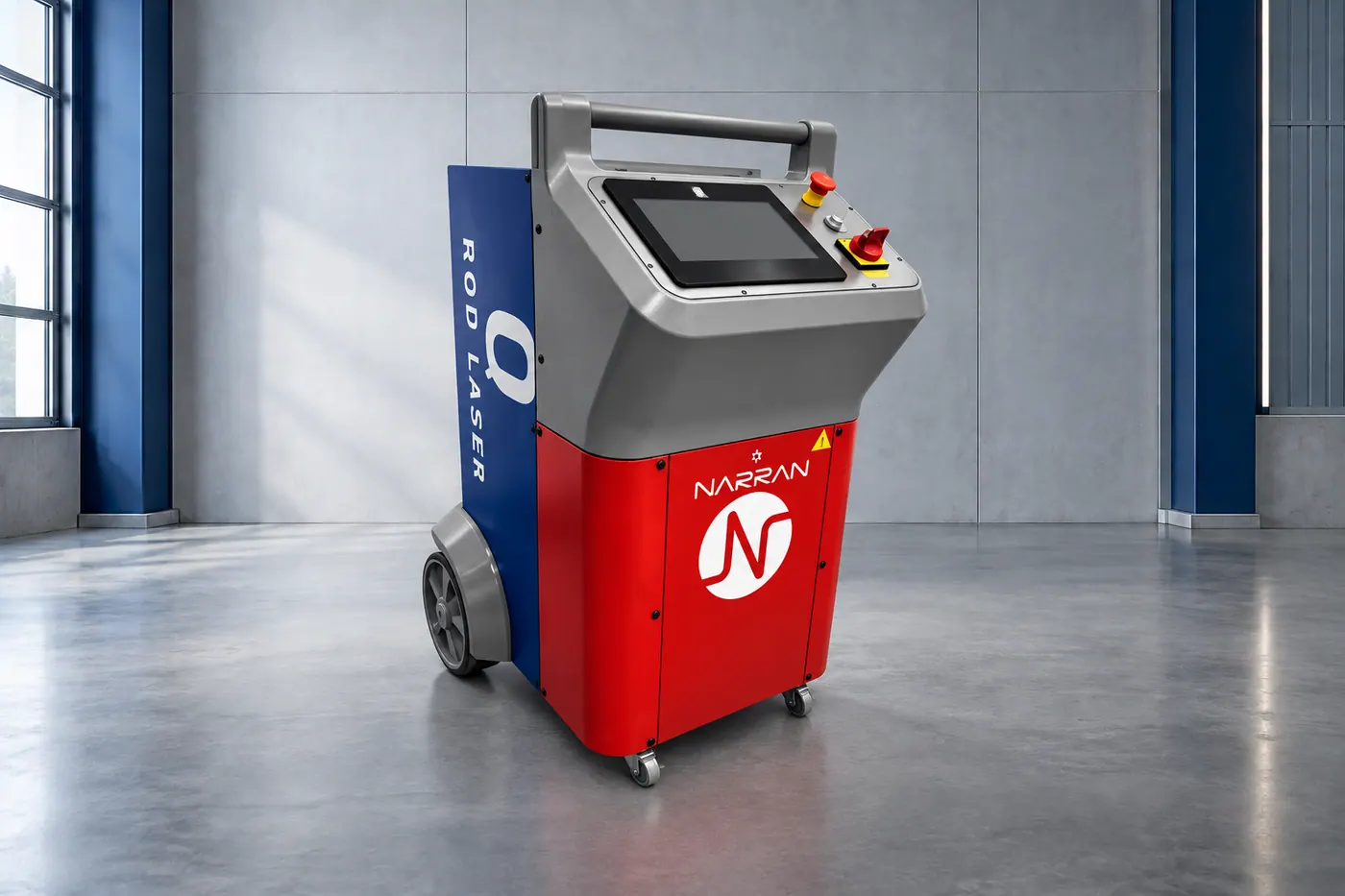
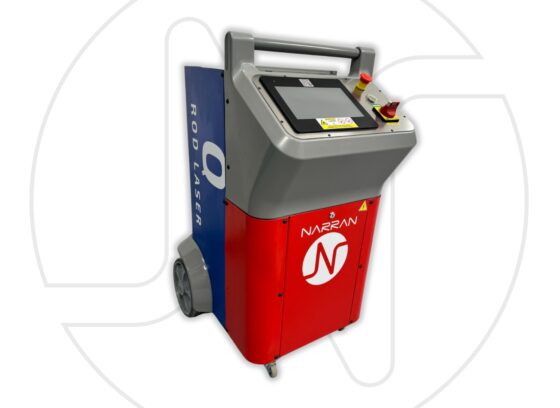
ROD Q: data according to the manufacturer
ROD Q is the only QCW machine in the range. According to the manufacturer it delivers 450 W average power at a wavelength of 1064 nm, is air-cooled and runs on 200 to 240 V AC at 50 or 60 Hz. It weighs 100 kg and measures 64 × 72 × 107 cm. The fibre is 10 m long, and the manufacturer lists up to 50 m for special applications. Laser class 4. For robot use the manufacturer names interfaces to KUKA, ABB, UR and Stäubli.
What QCW means
QCW stands for quasi-continuous wave. The laser neither emits short nanosecond pulses like the pulsed ROD models nor radiates without interruption like a continuous-wave laser. It works with longer pulses whose peak power is well above the average power, which places QCW between the two other operating modes. A comparison of pulsed, continuous-wave and QCW operation is on the pulsed laser cleaner page.
Who ROD Q is of interest to
With air cooling and a connection to a standard socket, ROD Q needs neither cooling water nor a three-phase supply. At 100 kg it is heavier than the air-cooled Air models at around 40 kg, but much lighter than the water-cooled ROD machines at 240 to 250 kg. That makes it a fit for workshops that move a machine on castors between several workstations, and for cells where a robot guides the head.
If you are choosing between the designs, compare ROD Q with the pulsed ROD 500 Air and the continuous-wave DIVA 3000. Which operating mode removes your layer best depends on the material, the layer thickness and the required surface. A trial run or a quotation with a recommended setting settles the question.
What to include in your enquiry
State which material is being cleaned, which layer has to come off and roughly how thick it is. Give the area per day, the place of use and whether the work is done by hand or by robot. The quotation then names the current ROD Q configuration, the scope of supply and the safety requirements.
All machines are compared in the model overview.