INDUSTRIAL LASER CLEANING

Buying guide: which laser cleaning machine suits your task?

Build a practical brief for buying a laser cleaner: material, layer, process objective, handling and supply scope. Compare equipment against the same requirements.

Request equipment advice
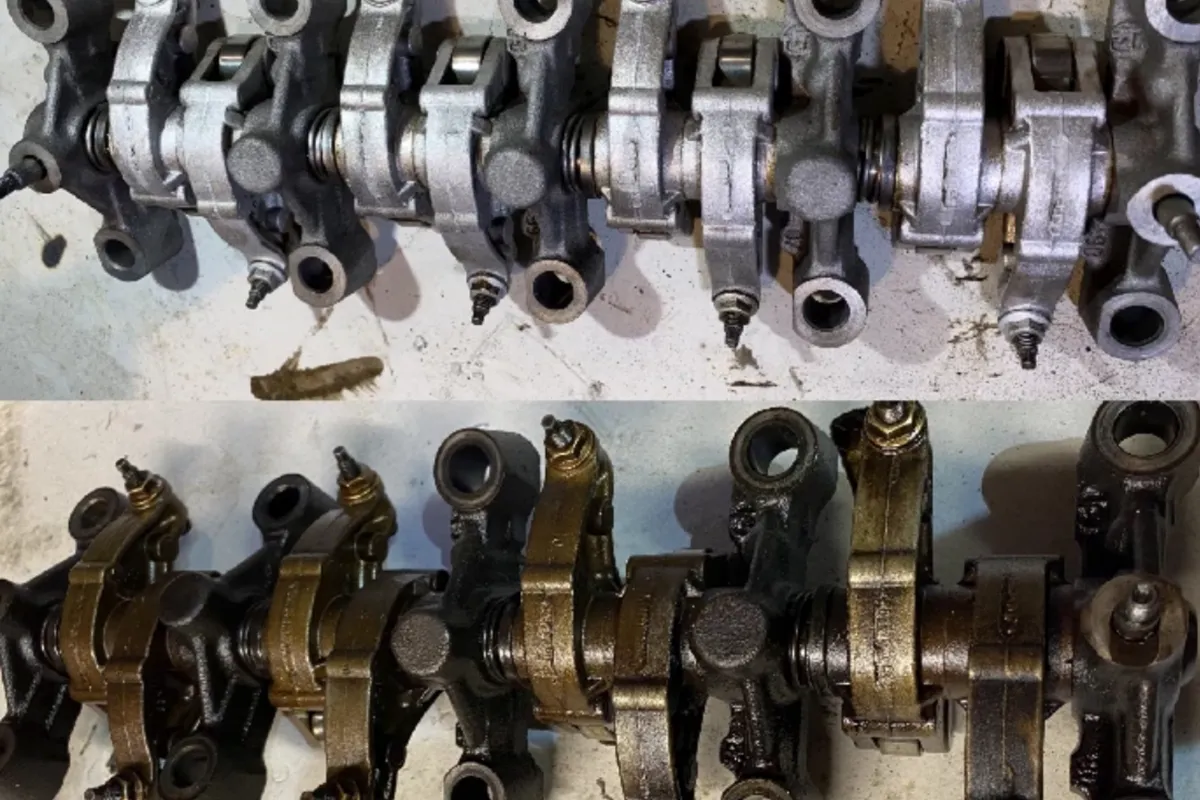
Rocker arms in two shots: bright metal surfaces at the top, dark deposits at the bottom
Manufacturer photo · rocker arms with cleaned surfaces (top) and with deposits (bottom)

MODELS IN OUR RANGE

Power classes in our range

Cooling, weight and power supply change with the power class. The table shows what to plan for at the installation site.

ModelAverage powerOperating modeCoolingMachine weightPower supply
ROD 100 Air100 Wpulsedair-cooled39 kg230 V
ROD 300 Air300 Wpulsedair-cooled39 kg230/110 V, 50/60 Hz
ROD 500 Air500 Wpulsedair-cooled40 kg230 V, 50 Hz
ROD 500500 Wpulsedwater-cooled240 kg230 V, 50 Hz
ROD 500 Bright+500 Wpulsedwater-cooled240 kg230 V, 50 Hz
ROD 10001000 Wpulsedwater-cooled250 kg3 + N + PE 400 V, 50 Hz
ROD 1000 Bright+1000 Wpulsedwater-cooled250 kg3 + N + PE 400 V, 50 Hz
ROD 20002000 Wpulsedwater-cooled250 kg3 + N + PE 400 V, 50 Hz
ROD 2000 Bright+2000 Wpulsedwater-cooled250 kg3 + N + PE 400 V, 50 Hz
ROD Q450 WQCWair-cooled100 kg200–240 V AC, 50/60 Hz
DIVA 30003000 Wcontinuous wave (CW)water-cooledon requeston request

Data as published by the manufacturer, as of 23 September 2026. The quotation confirms the current configuration.

MODELS IN OUR RANGE

Power class and weight at a glance

Weight does not grow evenly with power. Between the air-cooled and the water-cooled machines there is a jump from 40 to 240 kg.

air-cooledwater-cooled

Data as published by the manufacturer, as of 23 September 2026. The quotation confirms the current configuration.

Your cleaning brief to copy

Gather the details for a typical component. Choose “Unknown / to be clarified” for unresolved points. Copy the brief for your own records.

This brief records your answers. It does not assess suitability or safety, or recommend a model.

Without JavaScript, use these questions as a checklist and write your answers separately:

  1. What is the component made of?
  2. Which layer needs removing? Is its composition known?
  3. What are the shape and dimensions? Which areas are hard to reach?
  4. What finish or inspection criteria are required? What must stay unchanged?
  5. Where will cleaning take place? Will the machine stay there or move between locations?
  6. What is known about the power supply, extraction and protective arrangements?
  7. How often and how much cleaning is needed? Do parts change or does the process repeat?
  8. Which details are missing? Who can clarify them?

Describe the component and cleaning objective

Name the base material, unwanted layer and required final condition. Add typical dimensions, geometry and access. Separate your main task from occasional additional applications.

Our application hub helps distinguish rust removal, paint stripping, surface preparation, molds and weld cleaning. Those tasks should not automatically be assigned the same settings or acceptance criteria.
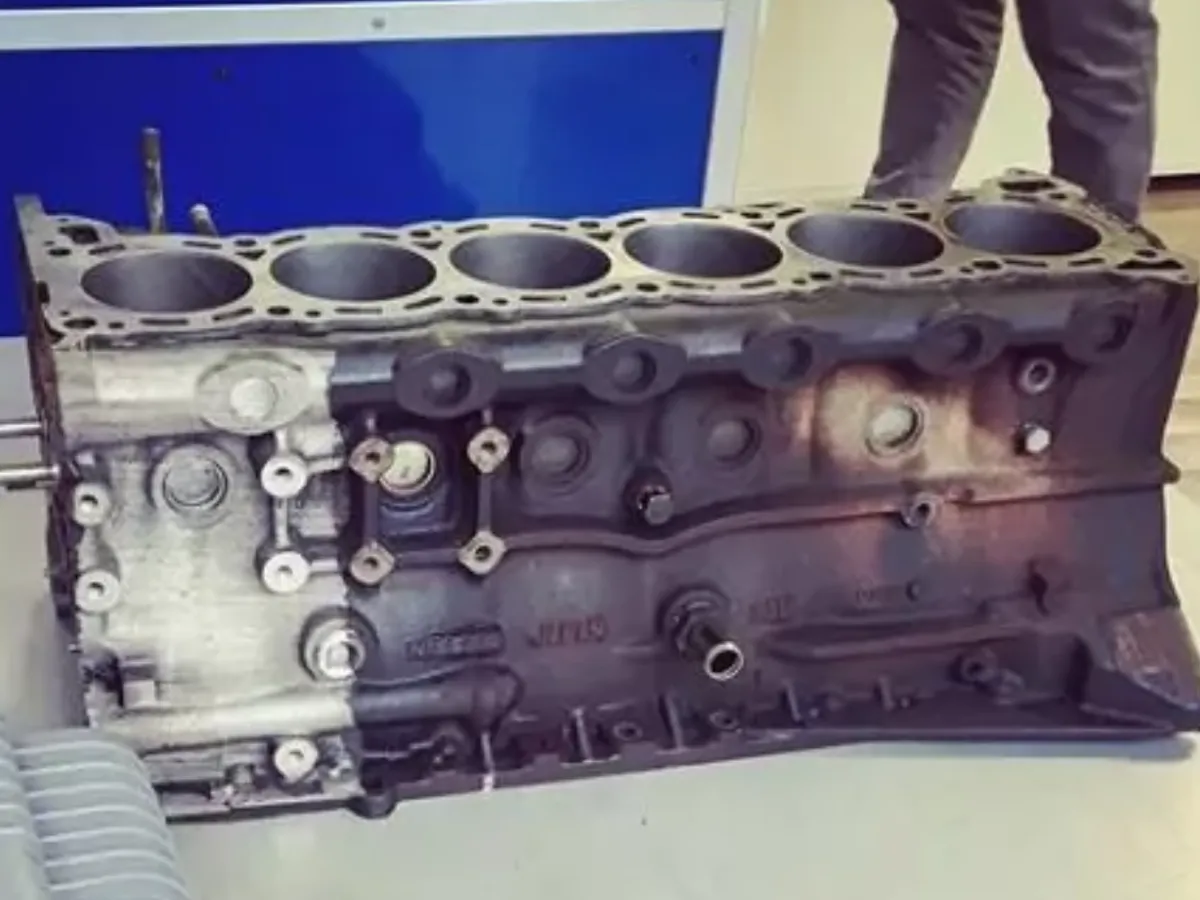
Engine block on a table, left section bright metal, the rest of the block dark
Partly cleaned engine blockThe bright section on the left has been treated, the rest has not. Manufacturer photo.
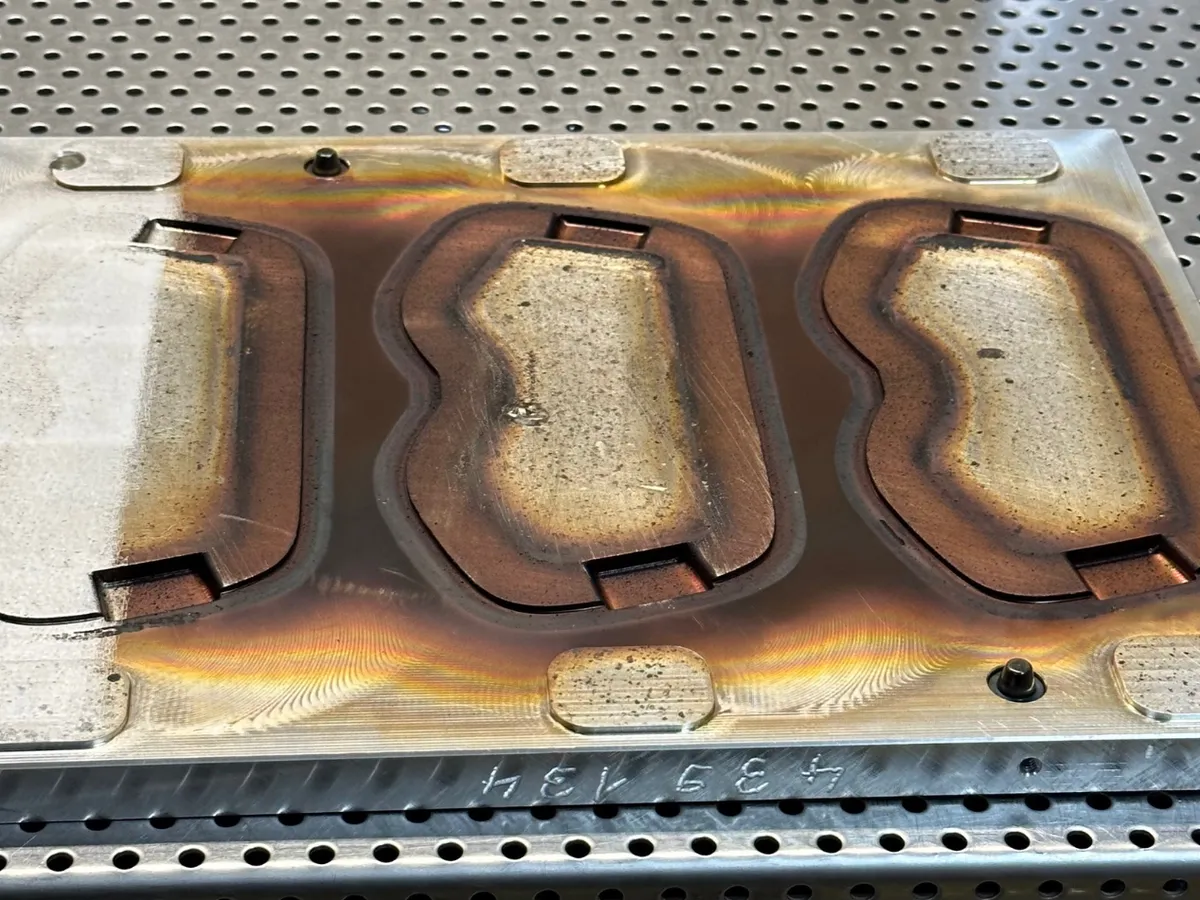
Mold plate with three cavities and brown discolouration, a bright cleaned strip along the left edge
Mold plate with residueA cleaned strip on the left, the initial condition on the right. Manufacturer photo.

Choose the power class together with the installation site

The power class decides what the machine needs on site. The air-cooled models with 100, 300 and 500 W weigh 39 to 40 kg according to the manufacturer and are specified for 230 V. ROD 500 is water-cooled, weighs 240 kg and is also specified for 230 V. ROD 1000 and ROD 2000 weigh 250 kg and need a 400 V three-phase supply.

Check early which supply is available at the workplace and whether the machine has to move between locations. According to the manufacturer, higher power covers a larger area in less time. Whether you need that reserve depends on the area and layer thickness of your typical task. The pulsed laser cleaner page explains the difference between pulsed and continuous-wave lasers.

Define the working process

Explain where cleaning will happen, how often it is needed and how components are presented. Compare handheld operation with automation requirements using the actual workflow. Consider protective arrangements, extraction, responsibilities and training at this stage.

How to measure suppliers

Ask every supplier for the same documents: EC declaration of conformity, operating instructions in German, the data sheet for the quoted configuration and the laser class. Ask who provides training, who provides service in Germany and how long spare parts take.

Ask for a statement about your component. A supplier who knows the material, layer and target surface can explain why a particular power class and operating mode is proposed. Whether a sample part can be processed is a point to raise in the conversation.

Reviews, tests and machines from China

Reviews and test videos show a machine on someone else’s part. What matters for your decision is whether the substrate, layer and target finish match your task. Ask which power and which material produced the result shown.

Laser cleaners are also offered directly from China, on Amazon or second-hand. Check the same points as with any supplier: the EC declaration of conformity and CE marking for that exact configuration, operating instructions in German and the stated laser class. Also clarify who provides service and spare parts in the EU. For a used machine, add the manufacturer’s documents and the condition of the laser source and processing optics.

Assess offers against the same brief

Ask for a clear configuration, supply scope, documentation and any unresolved points. Use the price factors to compare the whole investment rather than a single machine specification.

After gathering the main details, request an equipment quote. You do not need a model selection in advance; the brief provides the basis for technical clarification.

Task described?

You do not need to pick a model in advance. The brief is the basis for technical clarification.
Request a quote
Sources & further reading

MODELS IN OUR RANGE

Models to start with

Power class and operating mode affect the price most. To start with, look at the small classes first: two air-cooled machines with 100 and 300 W and a water-cooled one with 500 W. The quotation states the price.

View all models
01LASER CLEANING MACHINE
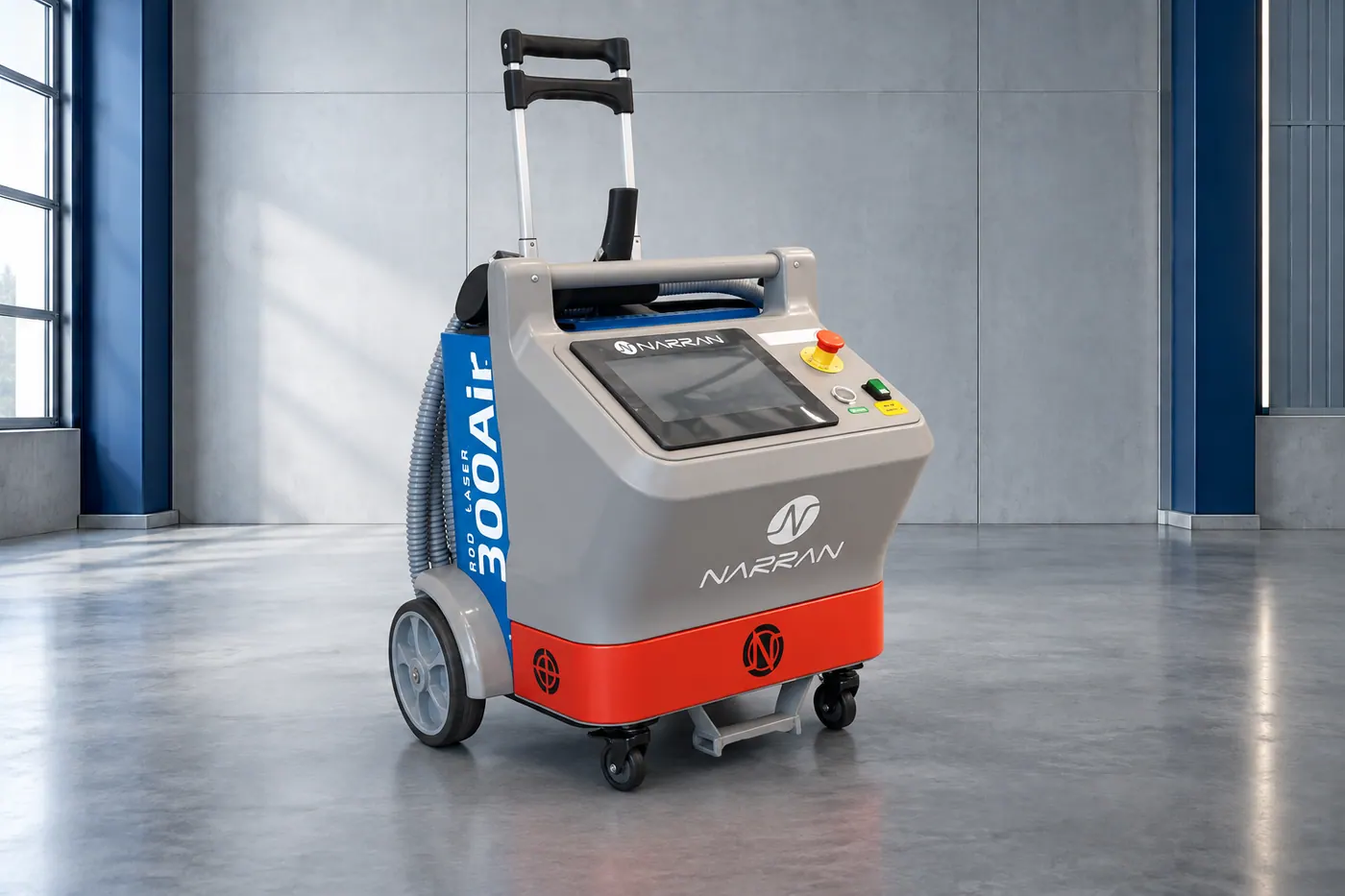
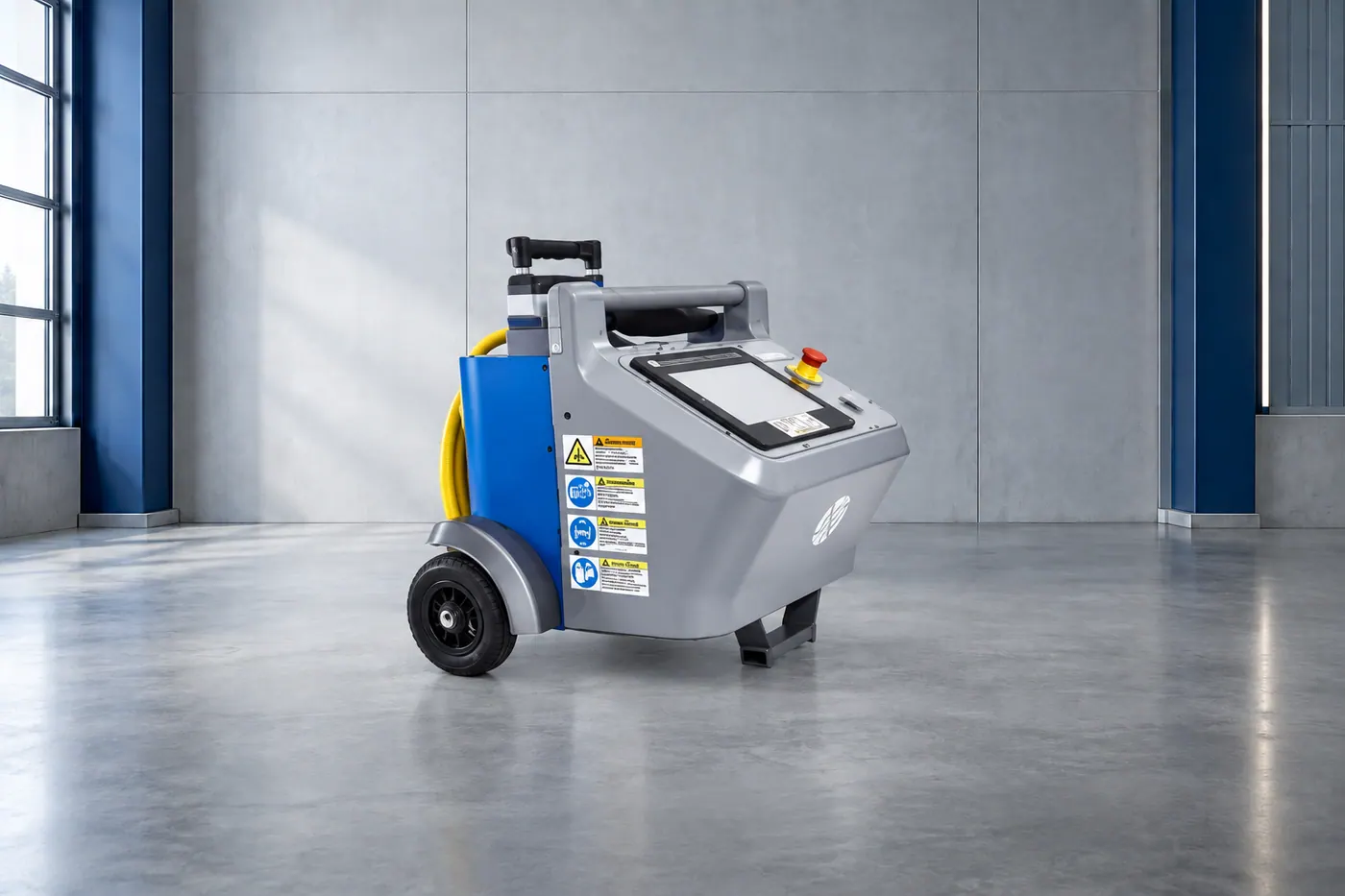
AI studio visualization for ROD 100 Air
AI visualization · Photo on the model page

ROD 100 Air

100 W · pulsed · air-cooled

Assess ROD 100 Air against your components and required surface result.

02LASER CLEANING MACHINE
AI studio visualization for ROD 300 Air
AI visualization · Photo on the model page

ROD 300 Air

300 W · pulsed · air-cooled

Enquire about ROD 300 Air for your workflow and planned components.

03LASER CLEANING MACHINE
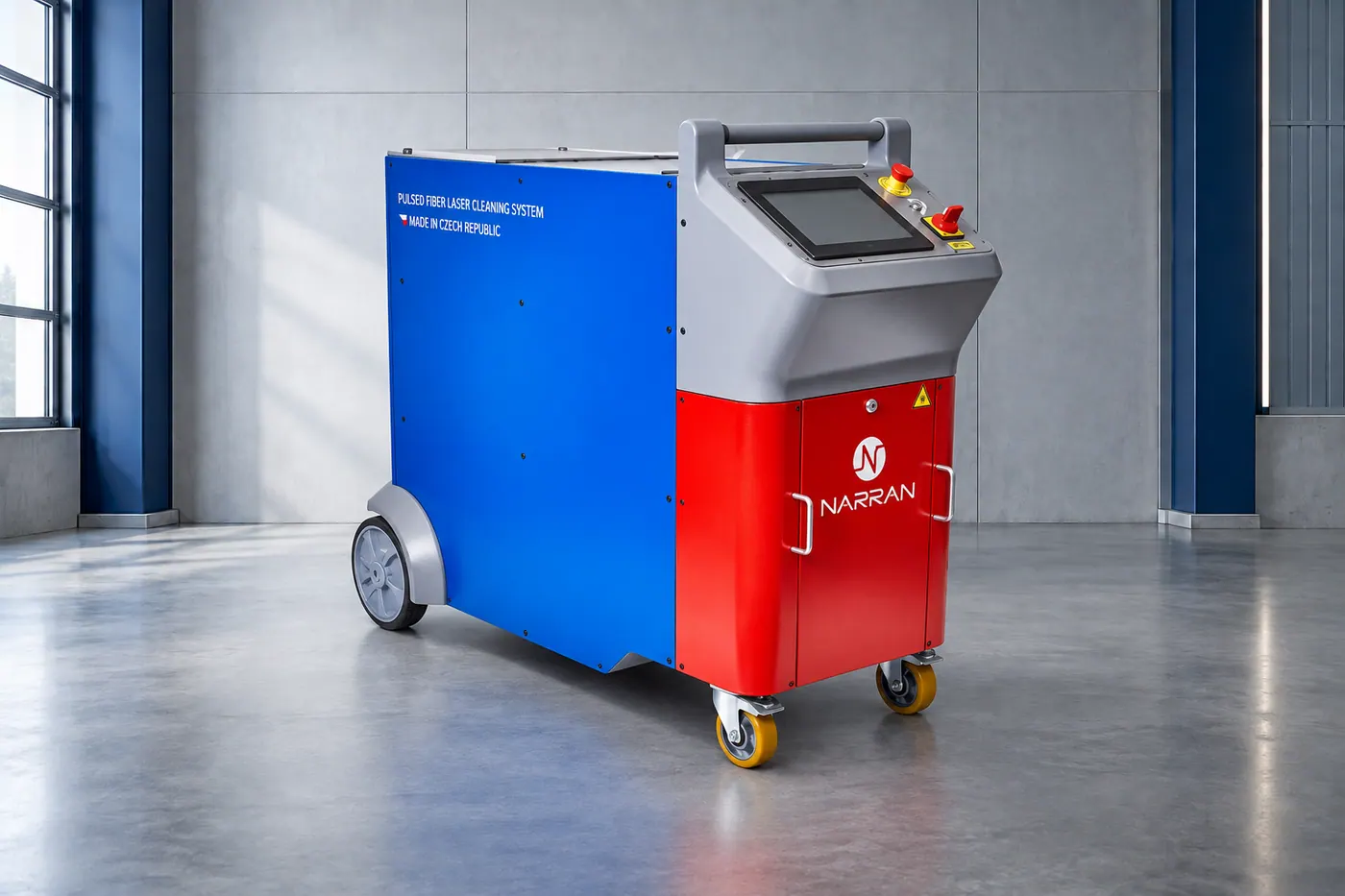
AI studio visualization for ROD 500
AI visualization · Photo on the model page

ROD 500

500 W · pulsed · water-cooled

Assess ROD 500 for your cleaning task and compare it with Bright+.

Data as published by the manufacturer, as of 23 September 2026. The quotation confirms the current configuration. Studio views are AI visualizations based on manufacturer images.

YOUR NEXT STEP TOWARDS EQUIPMENT

Planning to buy a laser cleaning machine?

Describe your application and intended use to prepare equipment selection.

Request a quote