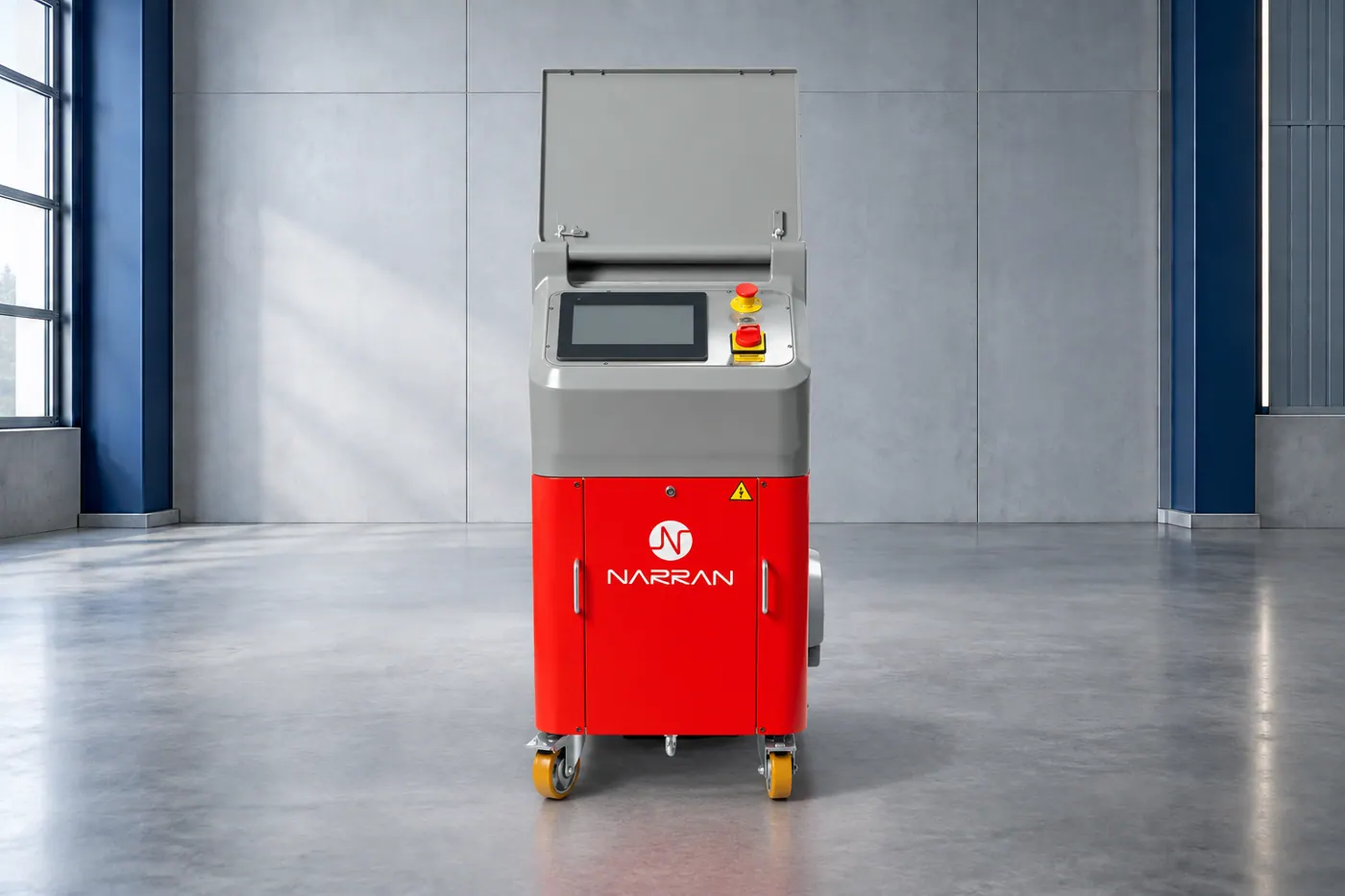
01LASER CLEANING MACHINE
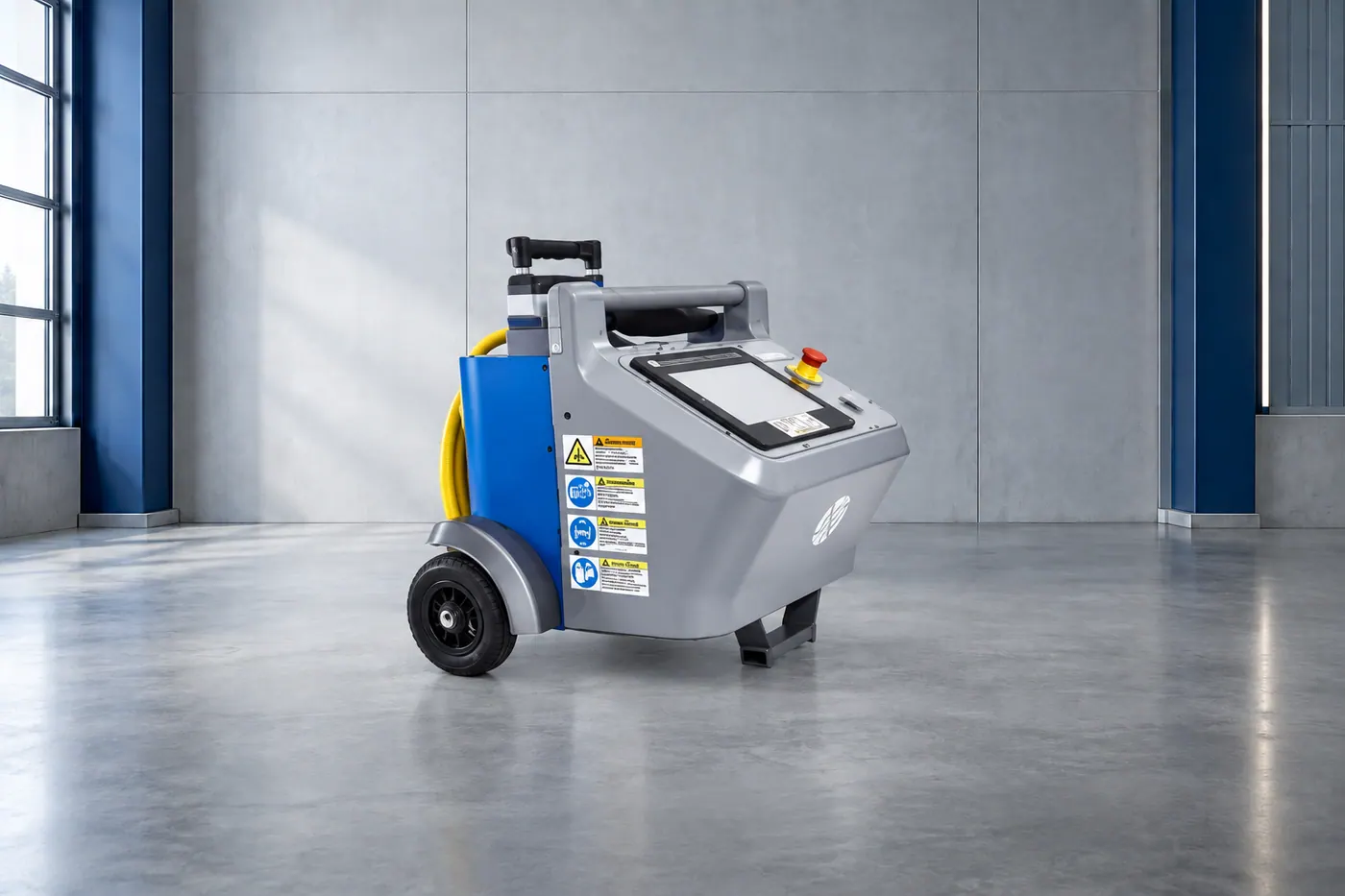
ROD 100 Air
100 W · pulsed · air-cooled
Assess ROD 100 Air against your components and required surface result.
INDUSTRIAL LASER CLEANING
Eleven models from 100 to 3000 W: pulsed laser cleaners and one continuous-wave laser, with the manufacturer’s data on cooling, weight and power supply. Choose a model or describe your task.
Request equipment adviceMODEL RANGE
Compare the models in our range and enquire about a configuration for your application.
100 W · pulsed · air-cooled
Assess ROD 100 Air against your components and required surface result.
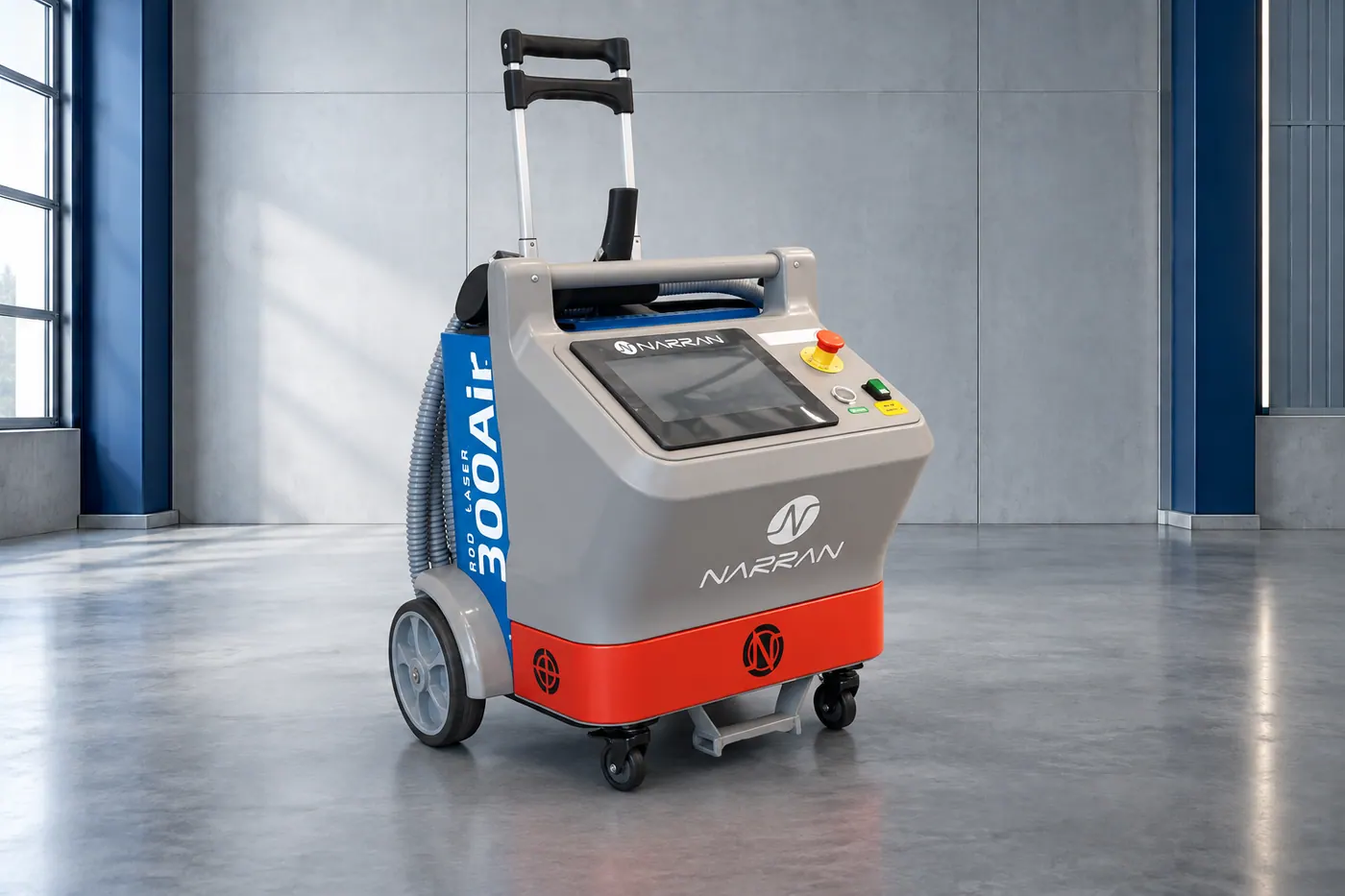
300 W · pulsed · air-cooled
Enquire about ROD 300 Air for your workflow and planned components.
500 W · pulsed · air-cooled
Enquire about ROD 500 Air: 500 W with air cooling for work in changing locations.
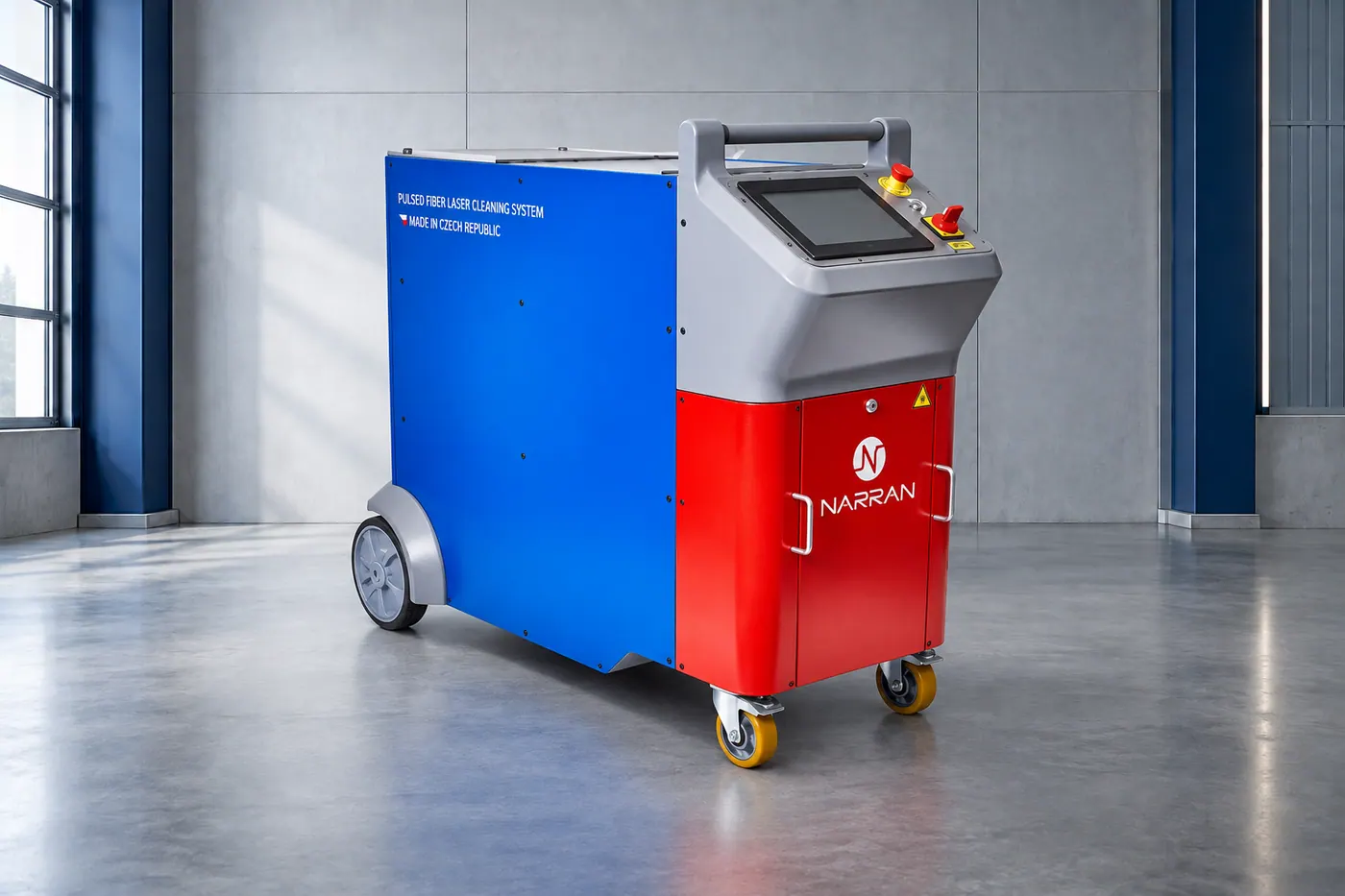
500 W · pulsed · water-cooled
Assess ROD 500 for your cleaning task and compare it with Bright+.
500 W · pulsed · water-cooled
Select ROD 500 Bright+ and compare it with ROD 500.
1000 W · pulsed · water-cooled
Assess ROD 1000 for your process and the next production step.
1000 W · pulsed · water-cooled
Compare Bright+ with ROD 1000 against the same process.
2000 W · pulsed · water-cooled
Assess ROD 2000 against your cleaning scope and workplace.
2000 W · pulsed · water-cooled
Enquire about ROD 2000 Bright+ and compare it with the base model.
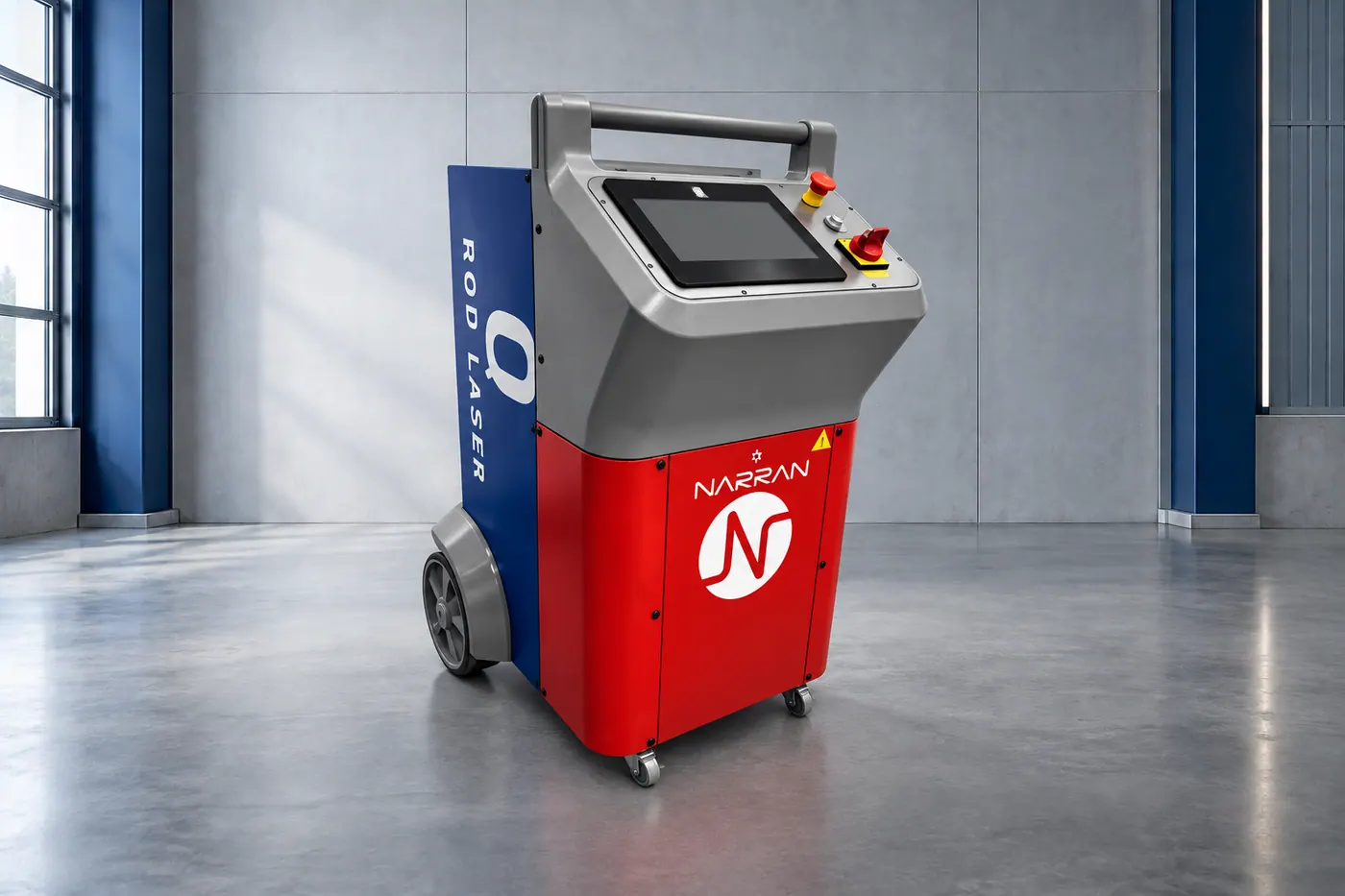
450 W · QCW · air-cooled
Assess ROD Q for your component, layer and required finish.
3000 W · continuous wave (CW) · water-cooled
Assess DIVA 3000 for your work area and request documentation.
The studio views are AI visualizations based on manufacturer images. The original manufacturer photos are on the model pages; images of models within the same range may differ from the exact configuration.
MODELS IN OUR RANGE
The models from 100 to 3000 W with the manufacturer’s data on operating mode, cooling, weight and power supply.
| Model | Average power | Operating mode | Cooling | Machine weight | Power supply |
|---|---|---|---|---|---|
| ROD 100 Air | 100 W | pulsed | air-cooled | 39 kg | 230 V |
| ROD 300 Air | 300 W | pulsed | air-cooled | 39 kg | 230/110 V, 50/60 Hz |
| ROD 500 Air | 500 W | pulsed | air-cooled | 40 kg | 230 V, 50 Hz |
| ROD 500 | 500 W | pulsed | water-cooled | 240 kg | 230 V, 50 Hz |
| ROD 500 Bright+ | 500 W | pulsed | water-cooled | 240 kg | 230 V, 50 Hz |
| ROD 1000 | 1000 W | pulsed | water-cooled | 250 kg | 3 + N + PE 400 V, 50 Hz |
| ROD 1000 Bright+ | 1000 W | pulsed | water-cooled | 250 kg | 3 + N + PE 400 V, 50 Hz |
| ROD 2000 | 2000 W | pulsed | water-cooled | 250 kg | 3 + N + PE 400 V, 50 Hz |
| ROD 2000 Bright+ | 2000 W | pulsed | water-cooled | 250 kg | 3 + N + PE 400 V, 50 Hz |
| ROD Q | 450 W | QCW | air-cooled | 100 kg | 200–240 V AC, 50/60 Hz |
| DIVA 3000 | 3000 W | continuous wave (CW) | water-cooled | on request | on request |
Data as published by the manufacturer, as of 23 September 2026. The quotation confirms the current configuration.
MODELS IN OUR RANGE
The bars show average power and machine weight as published by the manufacturer. The air-cooled machines weigh 39 to 40 kg, the water-cooled ones 240 to 250 kg.
Average power
Machine weight
Data as published by the manufacturer, as of 23 September 2026. The quotation confirms the current configuration.
The range has eleven models. For all of them we show the manufacturer’s data: nine pulsed ROD laser cleaners from 100 to 2000 W (500 W comes air-cooled and water-cooled, and 500, 1000 and 2000 W also as Bright+ with shorter pulses), the ROD Q QCW laser with 450 W and the DIVA 3000 continuous-wave laser with 3000 W.
The build changes with the power class. ROD 100 Air, ROD 300 Air and ROD 500 Air are air-cooled and weigh 39 to 40 kg according to the manufacturer. The water-cooled machines ROD 500, ROD 1000 and ROD 2000 weigh 240 to 250 kg. Models up to 500 W are specified for 230 V. ROD 1000 and ROD 2000 need a 400 V three-phase supply.
According to the manufacturer, higher power covers a larger area in less time, while the smallest machines handle thick deposits very slowly or not at all. A light, air-cooled machine is easier to move between work locations. Wattage alone does not tell you how fast a given layer comes off your component.
Our price is stated in the quotation. For orientation, this is where other suppliers’ published prices for new machines lie. What goes into the price is explained on the laser cleaning machine price page.
| Power class | New machines on the German market, excl. VAT |
|---|---|
| 100 W, pulsed | approx. €12,500 to €30,200 |
| 300 W, pulsed | approx. €16,700 to €66,300 |
| 500 W, pulsed | approx. €26,200 to €83,100 |
| 1000 W, pulsed | approx. €96,800 to €116,500 |
| 2000 W, pulsed | approx. €194,200 |
| 3000 W, continuous wave (CW) | approx. €7,200 to €26,500 |
Market values from other suppliers' published prices in Germany, as of 4 November 2026. Not a Laserkompass offer: the quotation states the price of the machine offered to you.
The terms describe the same kind of equipment: a laser that removes rust, paint, oxides or oil from a surface without touching it. The process needs no abrasives or cleaning agents. Machines differ in operating mode, power, cooling and processing head.
Most models in the range are pulsed. The pulsed laser cleaner page explains how that differs from a continuous-wave laser. If rust is your main task, the laser rust remover page shows a selection with buying criteria.
A laser cleaning machine removes rust, paint, oil, grease and oxide layers from metal: steel, stainless steel and aluminium. The layer absorbs the laser light and vaporises; with the right settings the metal underneath stays in place. The article How does laser cleaning work? explains the process in detail.
The main tasks have their own pages:
Wood, stone and graffiti are separate applications with their own limits. This page gives no equipment selection for them.
A laser cleaning machine has four parts: the base unit with laser source, cooling and control, the fibre cable, the laser head with lens and scanner, and the extraction. The cooling decides size and weight. In our range there are air-cooled machines up to 500 W; above that the machines are water-cooled. The laser head determines how wide the line is and from what distance you work. The details are on the handheld page.
Describe the base material, unwanted layer and required surface condition. A machine for changing maintenance tasks needs a different assessment from one used in a repeatable production step. State how the result will be evaluated: visual cleanliness, a bonding surface and preparation for coating can require different checks.
A handheld laser cleaner raises questions about access and ergonomics. A pulsed laser cleaner raises questions about energy delivery and surface response. A laser rust remover is chosen around the rust-removal task. These descriptions can overlap; they are not competing categories of machine.
For repeatable production, separately describe your automation requirements. A particular robot cell or interface is not assumed to be available.
What does the right model cost?
Prices are given in the quote, not on the website. Tell us the task and your budget range so the quote refers to a suitable power class.
Clarify accessories, extraction, safeguards, documentation and training alongside the machine. Use the price factors to compare the total scope. The buying guide helps prepare your quote request, even if you have not chosen a model.
YOUR NEXT STEP TOWARDS EQUIPMENT
Describe your application and intended use to prepare equipment selection.