Where laser cleaning helps in maintenance
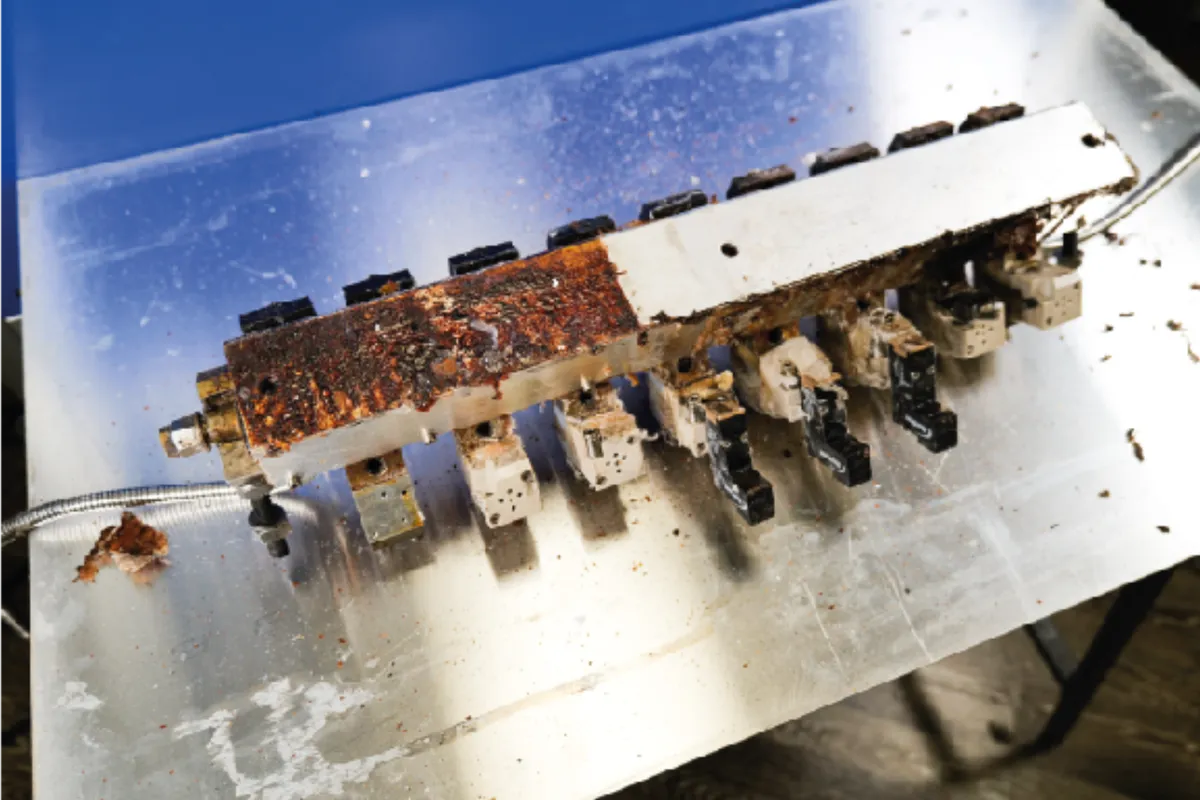
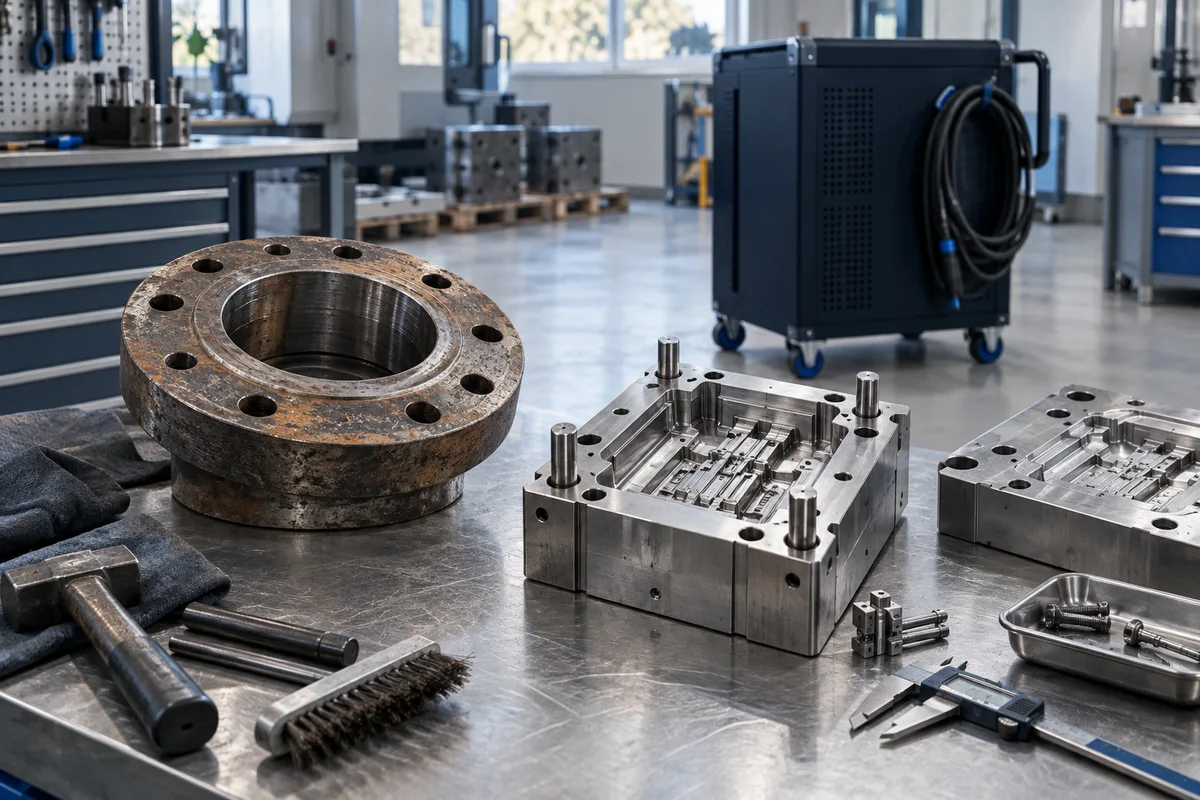
In maintenance no two jobs are alike. Today a rusty flange, tomorrow a mould with release-agent residue, next week a piece of steelwork that is to be repainted. A cleaning laser suits this work because it needs no abrasive and no chemicals and only treats the spot it is moved across.
The German Federal Institute for Occupational Safety and Health describes how hand-guided lasers are spreading from research into industry and trades, from mechanical engineering through automotive and shipbuilding to the restoration of monuments. Fraunhofer ILT names large steel structures as a field of use: on bridges, halls or wind turbine towers the laser removes weathered old coatings, rust and oxides before repainting. The difficulty is leaving intact protective layers in place.
The US Navy is testing the process on board its ships. In one trial on an aircraft carrier, hearing protection was only needed within about 1.5 m of the laser. With the needle gun it was just under 30 m.
Tasks and what counts for each
| Task | What counts | More |
|---|---|---|
| Rust on components and steelwork | rust condition and area determine the power class | rust removal, laser rust remover |
| Old paint and coatings | have hazardous substances in the paint tested first | paint removal |
| Moulds and tools | contour and surface must be preserved | mould cleaning |
| Weld seams | material and required surface | weld cleaning |
| Surfaces before welding or coating | the next process sets the target | surface preparation |
List frequent tasks and separate occasional exceptions so the main application drives equipment selection. One enquiry may cover several tasks, but should identify their priority.
Plan locations and handling
In mechanical engineering, energy installations or rail vehicles, components may remain installed or be difficult to access. Describe access, posture, transport and neighbouring work areas. These are assessment requirements, not claims of an existing industry approval.
For changing locations, weight and supply count. According to the manufacturer, the air-cooled models in our range weigh 39 to 40 kg and run on 230 V; the water-cooled ones weigh 240 to 250 kg. The page on handheld laser cleaning equipment compares the designs and has a checklist for work at a new location.
Occupational safety in day-to-day maintenance
Mobile equipment still needs a planned laser area, extraction and clear organisation at every location. For work at other companies’ premises the DGUV requires a supplementary risk assessment before work starts at that workplace. Working alone is not permitted when the risk is too high.
On noise: according to the DGUV the level is usually below 80 dB(A); in confined or reverberant rooms it can be higher. What a business has to arrange in detail, from the laser safety officer to eyewear, is in the article Laser safety in laser cleaning. These are German rules; other countries have their own.
What does a machine for maintenance work cost?
State typical components and locations. The price is stated in the quote.
Equipment for businesses and service companies
Industrial service companies buying their own machine can use the same preparation. A Laserkompass enquiry concerns equipment acquisition rather than ordering an on-site cleaning job. Whether buying pays off against renting or a contractor is shown in the guide on renting or buying.
The buying guide helps organise workload, quality objectives and supply scope before the enquiry.