What is laser cleaning?
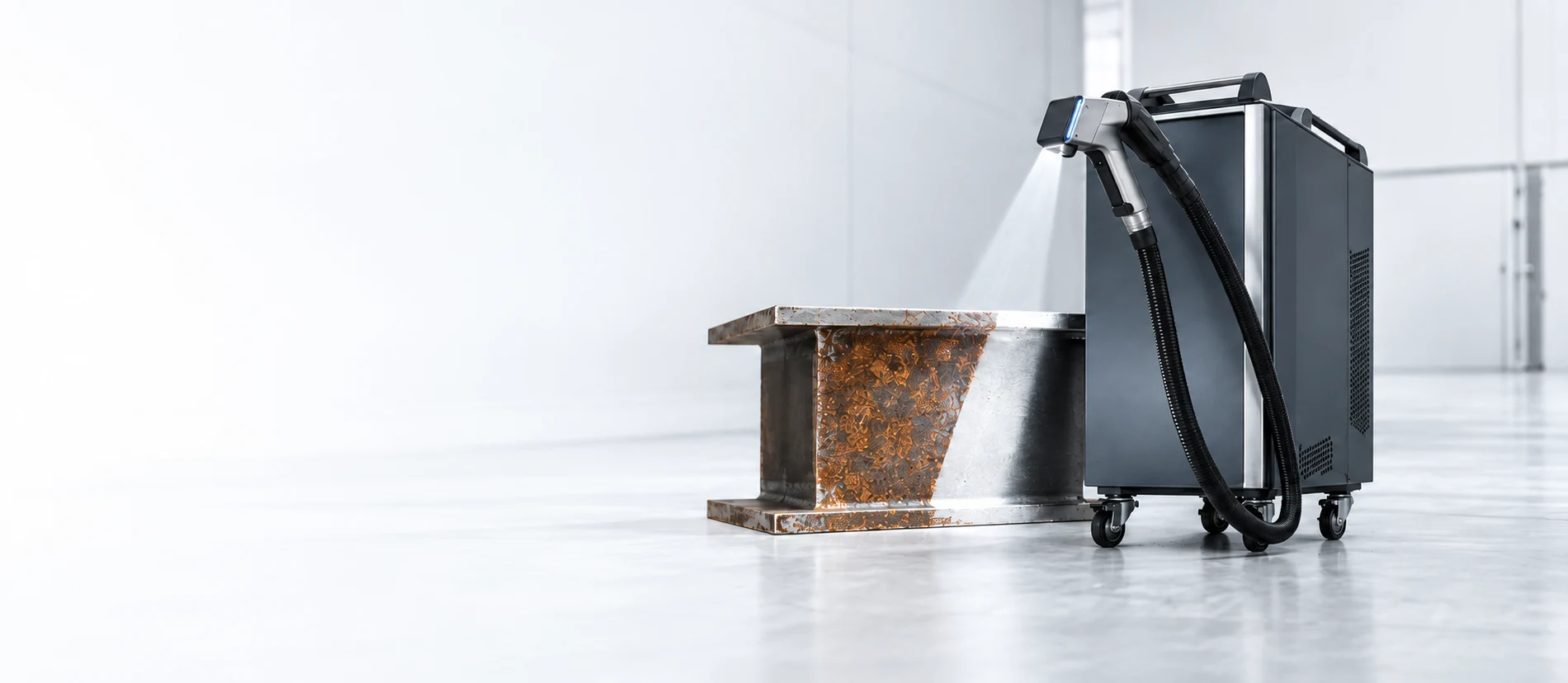
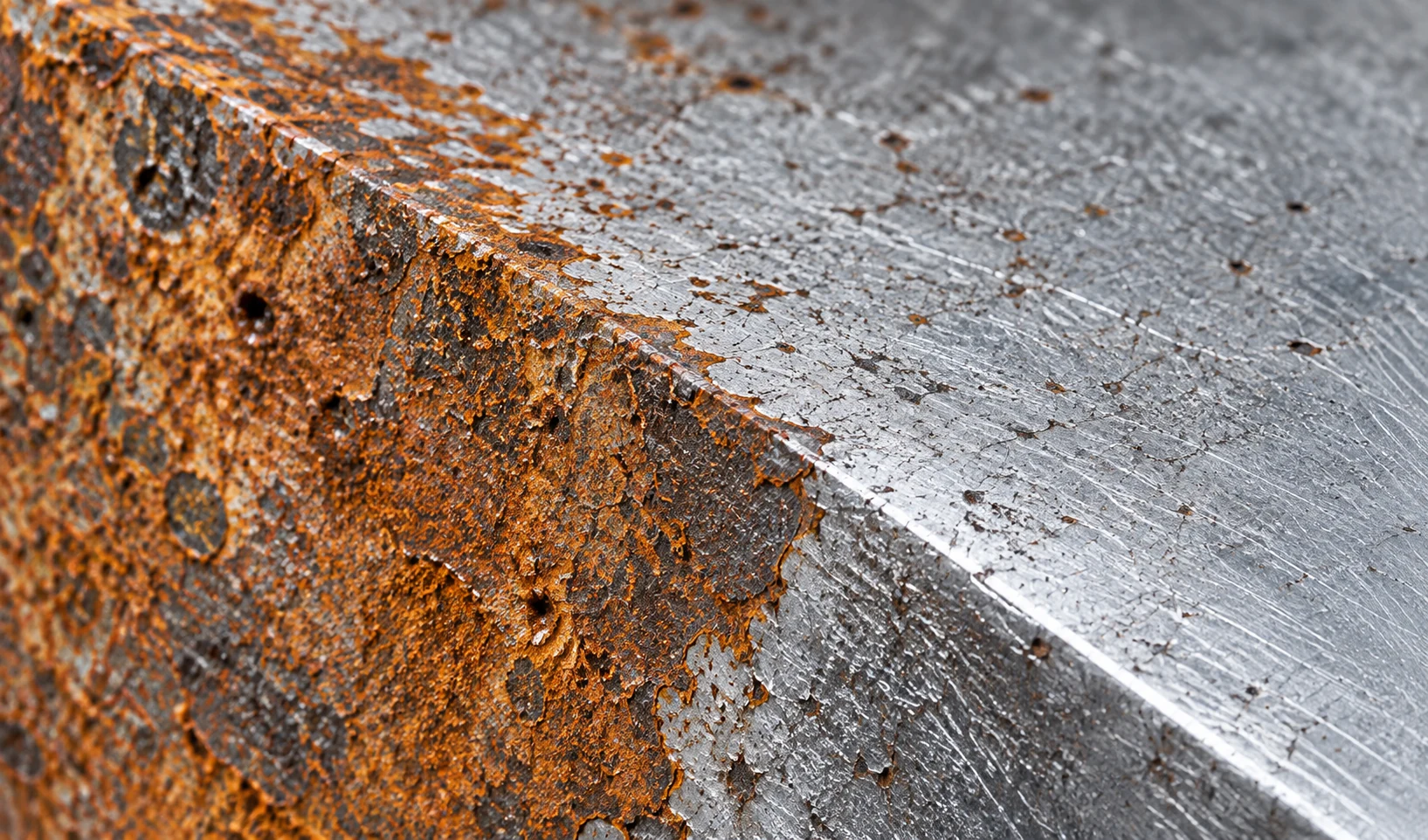
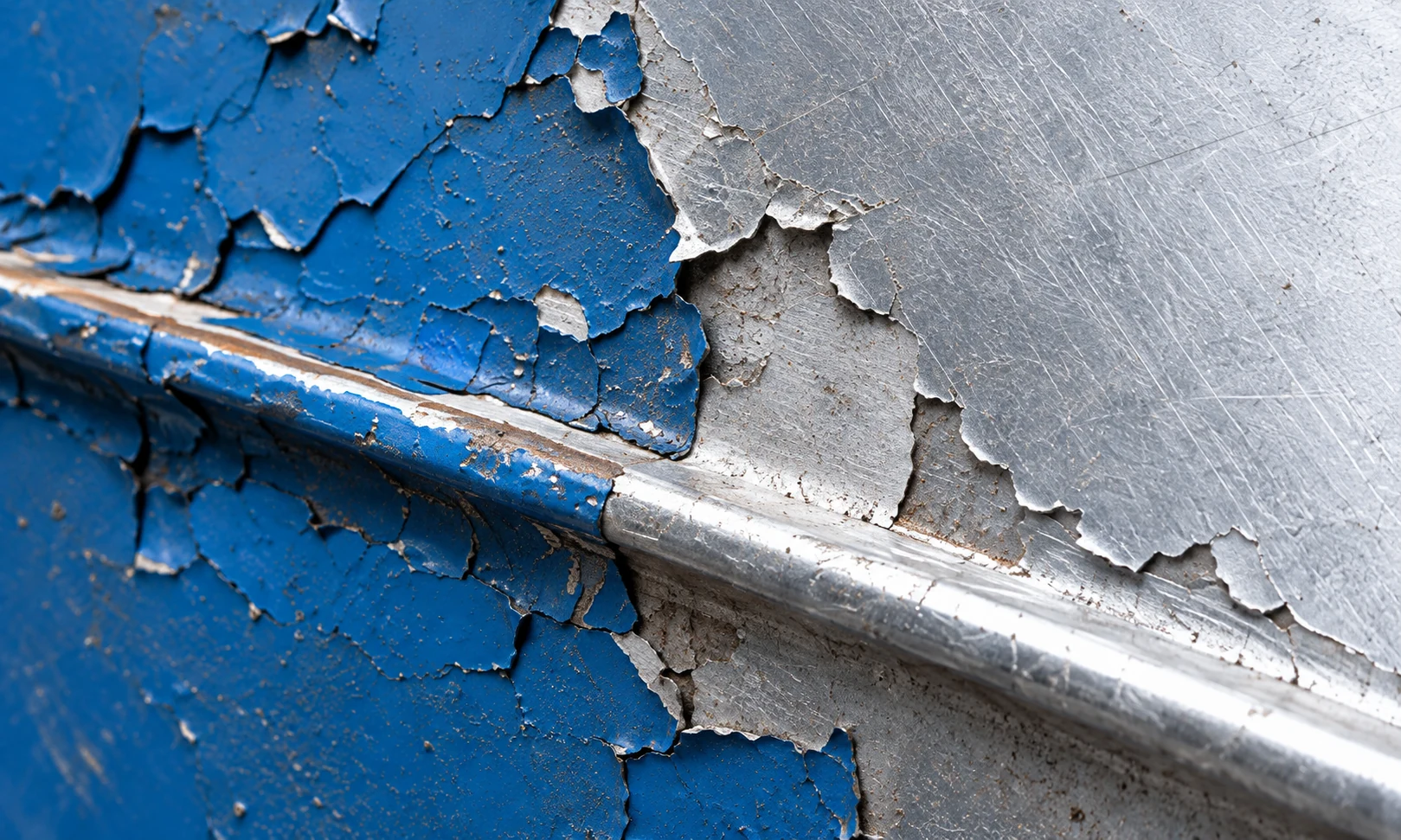
Laser cleaning is surface cleaning with light. A laser beam hits the layer that has to leave the component: rust, paint and other coatings, oxides, oil, grease, release agents or other contamination. The layer absorbs the energy and vaporises or flakes off. The metal underneath absorbs less light and, with the right settings, stays in place. The beam does not touch the part, and no blasting media, chemicals or water are needed. Businesses use the process, also called laser surface cleaning, mostly on metal: in maintenance, on molds and tools, and before welding, bonding or coating.
How laser cleaning works
A pulsed laser fires short pulses of light at the surface in rapid succession, each lasting only nanoseconds. A scanner in the cleaning head joins them into a line a few centimetres long, which the operator guides over the part like a wide brush.
The key variable is energy density. Below a threshold nothing happens, above it material is removed. Coating and base metal each have their own threshold, and if the coating’s is lower, a process window opens in which the coating comes off and the metal stays. Fraunhofer ILT calls the process self-limiting on metal in most cases. That is not guaranteed: too much energy density or too slow a pass melts the surface slightly or discolours it. A trial on the part shows whether a task sits inside the window, not a data sheet.
The removed material turns into fume and fine dust and belongs in an extraction unit with a filter. The guide on how laser cleaning works explains the basics with diagrams.
Advantages and limits of laser cleaning
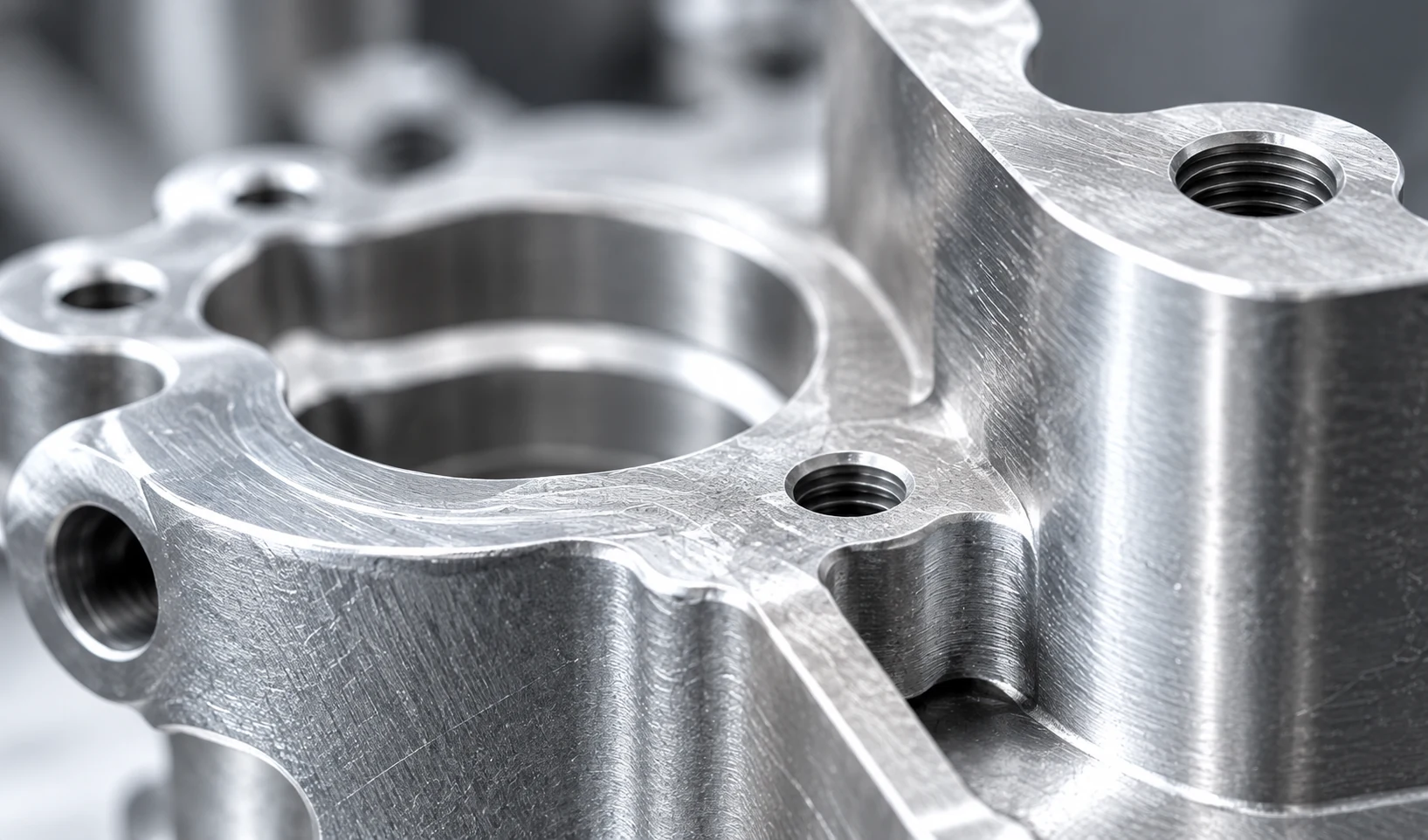
The laser is precise and hits only the spot it is guided over. Partial areas need no masking, and dimensions, fits and threads stay as they were. Blasting media and chemicals are not needed; in operation you pay for power, filters and maintenance. The only waste is what sat on the part before, and it ends up in the filter. According to the German accident insurers (DGUV), noise is usually below 80 dB(A).
Where the process reaches its limits:
- Layers thicker than about 0.5 mm are generally considered uneconomical, especially over several square metres.
- Firmly adhering mill scale does not come off economically with a pulsed laser.
- The beam needs a clear line of sight. Winding pipes and cooling channels stay out of reach.
- On very large areas blasting is faster, as laser manufacturers themselves concede.
Which tasks and materials laser cleaning suits
It works best on steel, stainless steel and aluminium, because layer and substrate differ clearly there. On plastic the process window is narrow, and a trial on the part is essential. The most common tasks have their own pages:
- Rust removal: the laser lifts corrosion off steel parts, molds and individual spots on installed machines.
- Paint removal: paint and powder coating come off layer by layer, if wanted only the topcoat.
- Surface preparation: oil, release agents and oxides disappear from the spot that is to be bonded, coated or welded.
- Mold and tool cleaning: deposits come off without harming the contour.
- Weld cleaning: the laser removes heat tint and oxides on stainless steel.
The overview by industry shows how these tasks differ in automotive production and in maintenance.
Pulsed laser or continuous wave: which power class?
Pulsed lasers release their energy in short bursts and barely heat the part. They are the usual choice for cleaning, above all for molds, thin sheet and delicate surfaces. Continuous-wave lasers emit without a break. They cost less to buy and suit solid steel parts that conduct heat away well.
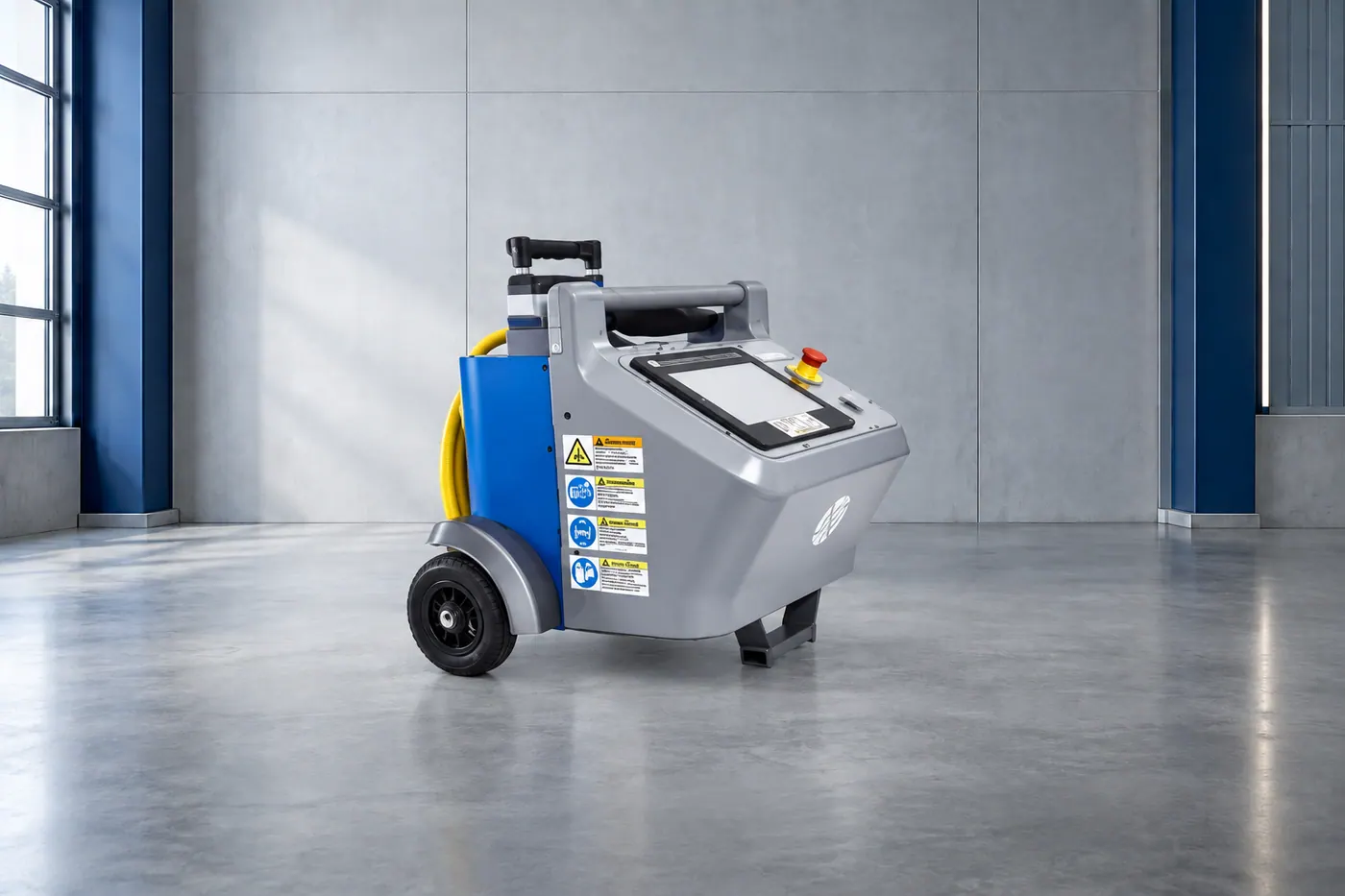
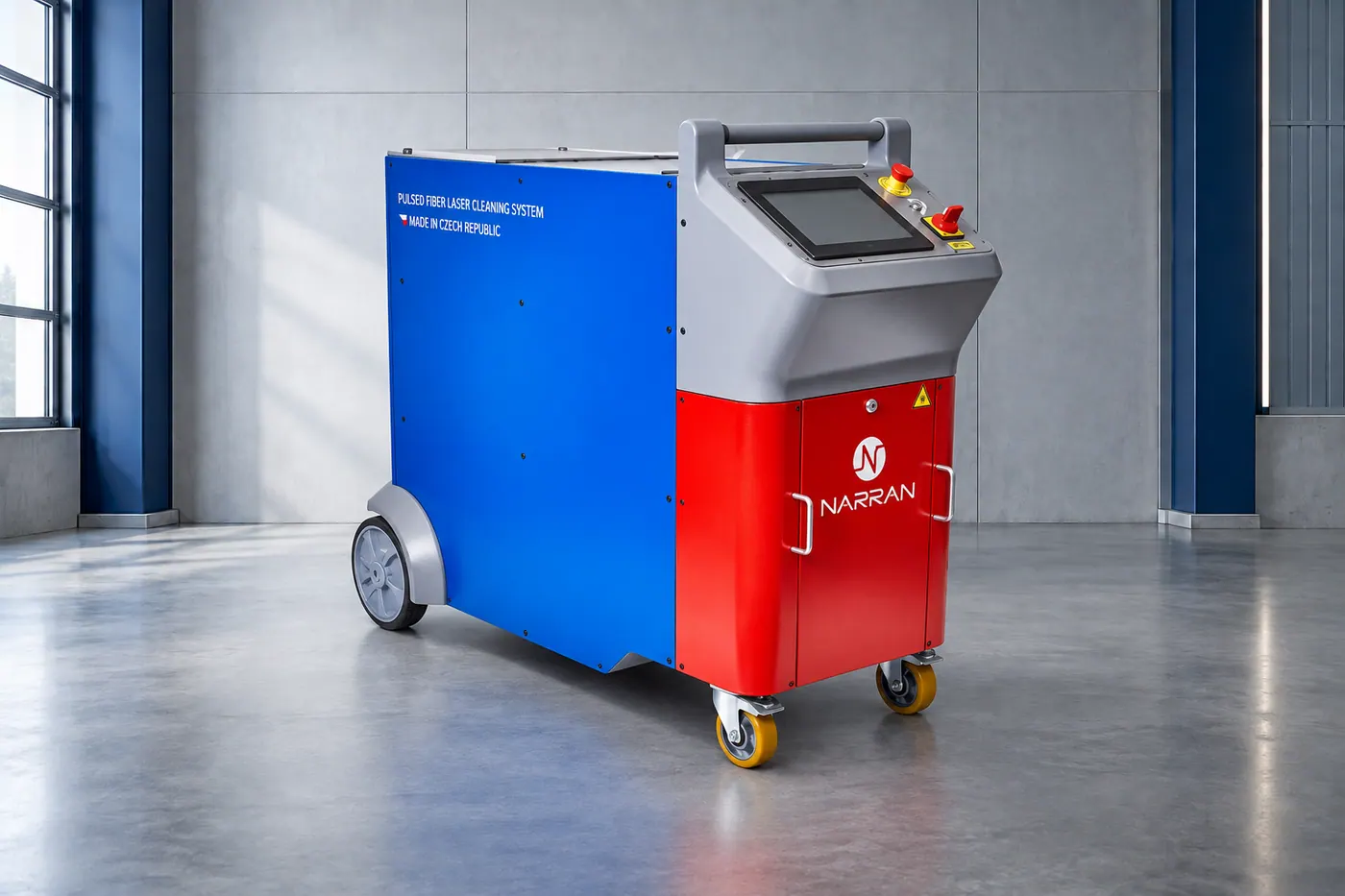
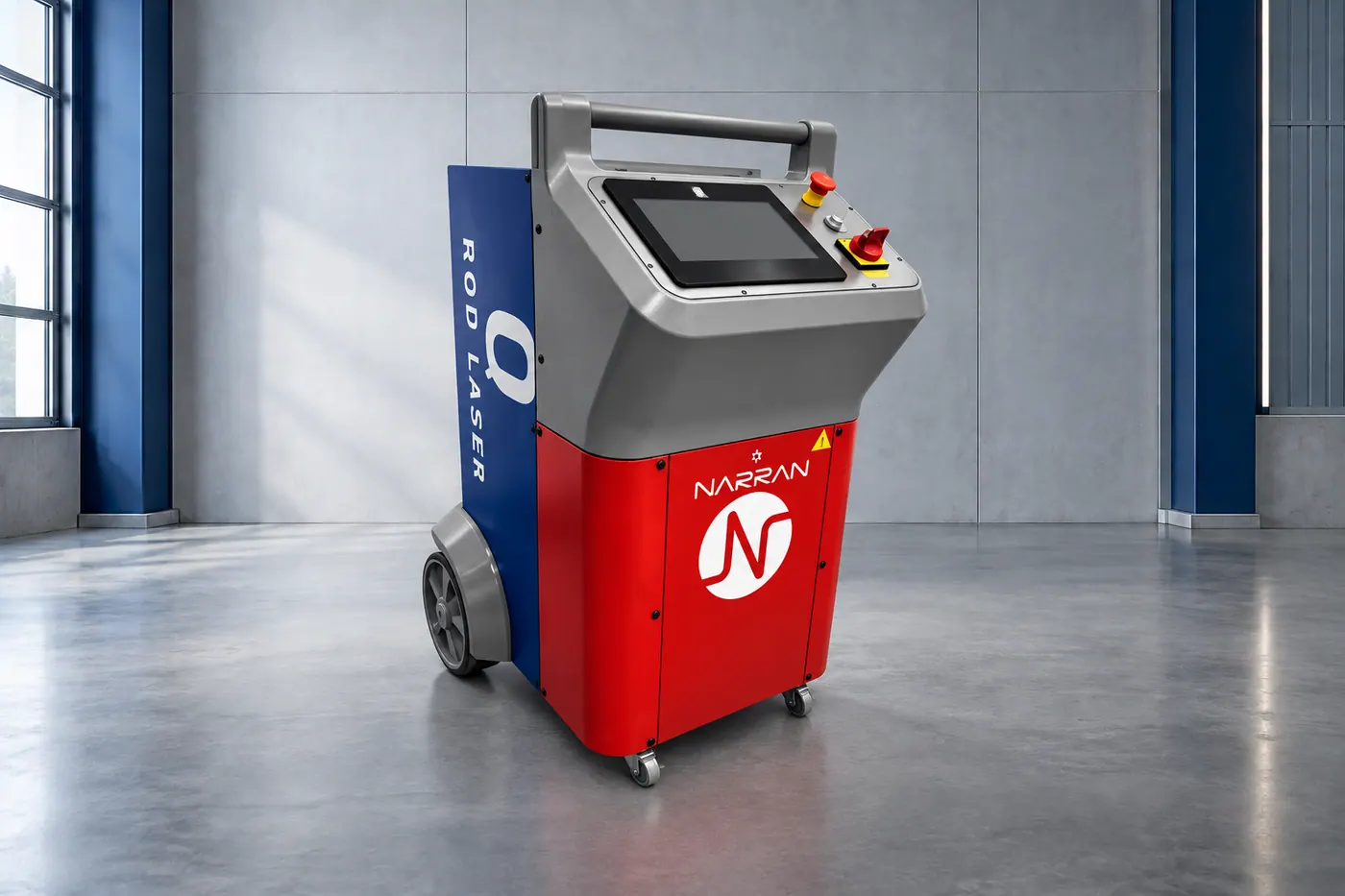
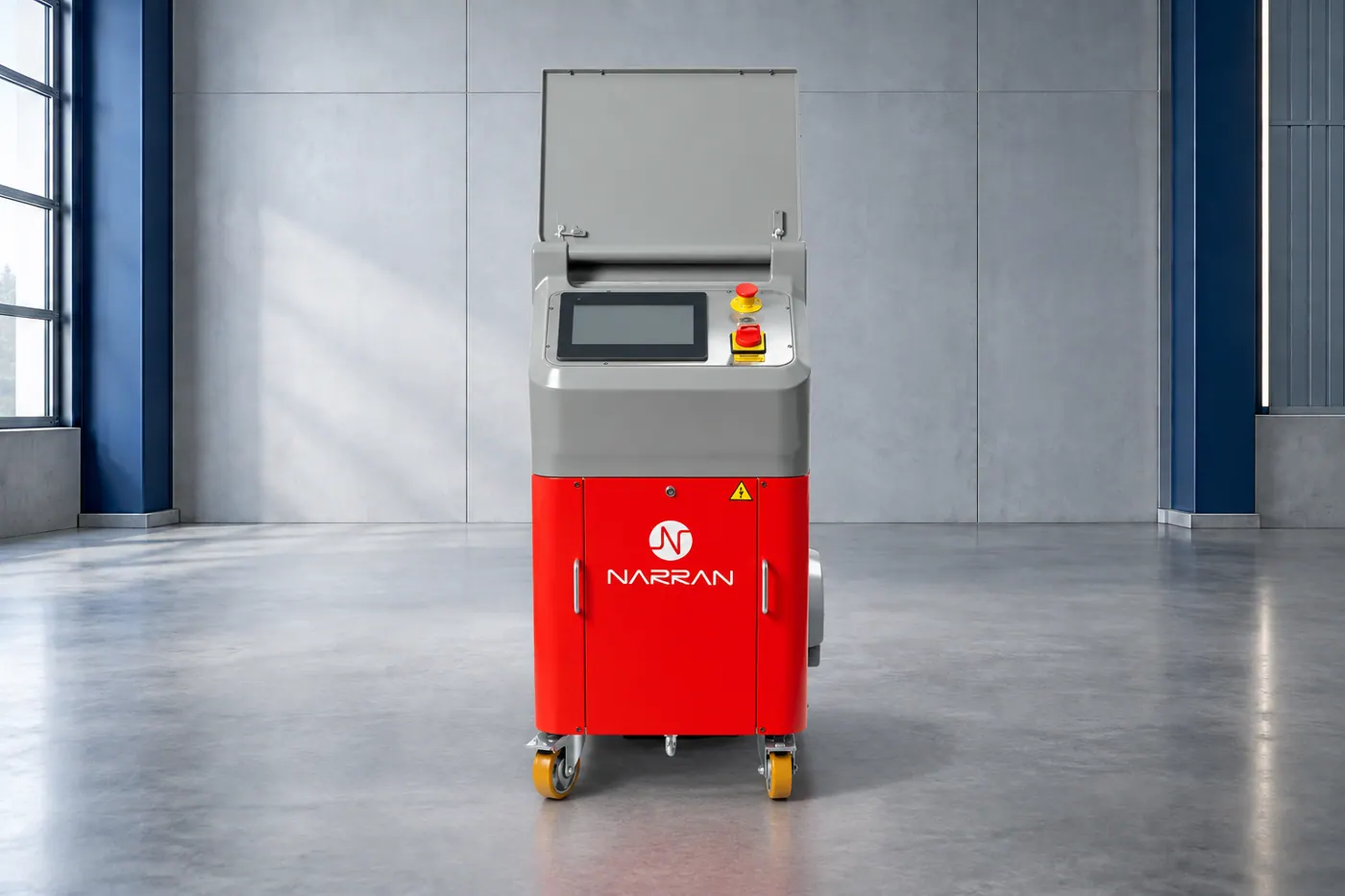
The range of laser cleaning machines runs from 100 to 3000 W. According to the manufacturer, the air-cooled models with 100, 300 and 500 W weigh 39 to 40 kg and run on 230 V. Water-cooled machines are much heavier, and from 1000 W they need a three-phase 400 V supply. Which class fits your layer depends on area and layer thickness, not on wattage alone. More on the pages for pulsed laser cleaners, the laser rust remover and handheld machines.
Laser cleaning compared with sandblasting, dry ice and chemicals
| Method | Strength | Limit |
|---|---|---|
| Laser | partial areas without masking, no blasting media, usually below 80 dB(A) | slower on large areas, no blast profile, high purchase cost |
| Sandblasting | fast on large areas, gives the roughness that coating systems require | spent abrasive, 112 to 119 dB(A) at the nozzle, sealing surfaces must be covered |
| Dry ice | no abrasive residue, works on hot molds | very loud, firmly adhering rust and tough paints stay |
| Chemicals | reaches cavities and awkward parts | chemical waste, risk of hydrogen embrittlement in high-strength steels |
Large, evenly coated steel surfaces are blasted. Molds, mating surfaces and individual spots are better cleaned by laser. Figures and a decision aid are in the guide laser cleaning vs sandblasting.
Laser safety: class 4 belongs in the plan
Cleaning lasers belong to laser class 4, the highest. The beam is invisible, stays hazardous over long distances, and metal reflects it. Before first use the business needs a risk assessment, a demarcated laser area, safety eyewear for everyone inside and extraction at the point of work. The employer appoints the laser safety officer in writing unless the employer has the expertise (section 5 OStrV). The rest, with a checklist, is explained in the article laser safety for laser cleaning. Safety belongs before the purchase, because it shapes the workplace and the costs.
What the price depends on
Laser class and operating mode have the strongest effect, followed by cooling, cleaning head and fibre length. Extraction, protective equipment, training and delivery are separate items in many quotes, so quotes are comparable only when they cover the same scope. Buying is expensive, running is cheap: it takes power, filters and maintenance, but no blasting media. The page on price and costs explains the items. If you clean on only a few days a year, the guide to renting or buying works through both routes.
How to get to an enquiry
Start with a typical component: base material, layer, area per job and the state the surface should be in afterwards. The buying guide walks you through these points. Send that description with the enquiry form; you do not need to know the model. Laserkompass reviews every enquiry by hand and follows up with questions. Only the concrete sales quote contains binding statements on equipment, costs and delivery. The process is on the page how your enquiry works.
Laserkompass prepares the purchase of your own machine. We do not offer cleaning jobs on your premises.